For a UK commute you need less kit than the shop wants to sell you. The law asks for one thing only: lights and reflectors when you ride between sunset and sunrise. Beyond that, five things make daily riding work: lights, a decent lock, mudguards, a way to fix a puncture and a way to carry your stuff. Everything else can wait until you know how you actually ride.
Below is the checklist, split into what the law requires, what a commuter genuinely needs, what is worth adding after a few weeks and what you can skip. Each item links to a more detailed guide if you want to go deeper.
What the law requires (and only after dark)
Highway Code rule 60 is the baseline: at night your bike must have a white front light and a red rear light lit. It must also have a red rear reflector, and amber pedal reflectors if it was made after 1 October 1985. The Department for Transport’s pedal cycles lighting guidance sets out the same list and applies it to any cycle used between sunset and sunrise.
That guidance also covers flashing lights. They are allowed, but a light used only in flashing mode must flash between 60 and 240 times a minute and reach at least 4 candela. Rule 60 adds that a steady front light is the better choice where there are no street lights.
Two things often assumed to be compulsory are not:
- A helmet. Rule 59 says you should wear one. The Highway Code’s introduction explains that only rules worded “MUST” or “MUST NOT” are legal requirements; “should” is advice.
- A bell. Regulation 4 of the Pedal Bicycles (Safety) Regulations 2010 says a new bike supplied assembled must come fitted with a bell. That is a rule for the seller. Nothing in it requires you to keep the bell on, although the Highway Code recommends you do.
In daylight, then, the law asks for no accessories at all. That is not the same as being ready for a commute, which is where the rest of this list comes in.
The five essentials for a daily commute
1. Lights you will actually use
Even if you only plan to ride in summer, an October evening or a dark January morning arrives sooner than expected. Rechargeable USB lights are the easy option: they stay on the bike or come off in seconds when you lock up. What matters for a commuter is a front light bright enough for the darkest part of your route, a rear light visible from the side as well as behind, and battery life that covers a round trip with some spare. Our guide to bike lights for commuting goes through brightness, mounting and charging.
Check the reflectors while you are at it. Most new bikes come with them, and they are easy to lose when you change pedals or fit a rack.
2. A lock that matches where you park
A bike left outside an office or station all day needs a proper lock, not the thin cable that came free with it. In the UK, the independent rating to look for is Sold Secure, which grades bicycle locks Bronze, Silver, Gold and Diamond. The rating to aim for depends on where the bike spends the day: a locked company cage is a different risk from a rail on a busy high street. If your bike is insured, read the policy too, because insurers can set conditions on how it is locked. Our guide to how to lock your bike covers lock types and technique, and bicycle insurance in the UK explains what policies typically ask for.
3. Mudguards
Mudguards are the difference between arriving at work ready to start and arriving with a stripe of road grit up your back. On a wet British morning they keep spray off you, off the rider behind and off your drivetrain. Full-length guards do the best job; clip-on guards fit bikes without mounting points but cover less. See our mudguards guide for which type suits your frame, and how to fit mudguards if you are doing it yourself.
4. A way to deal with a puncture
Sooner or later you will get a flat on the way in. Carry a spare inner tube that matches your tyre size, a pair of tyre levers and a compact pump or CO2 inflator, and you can usually fix it at the roadside rather than pushing the bike to the nearest station. A track pump at home is worth having too, because tyres at the right pressure puncture less and roll more easily. Our guides cover how to fix a puncture, choosing a bike pump and picking tyres for commuting that resist flats in the first place.
5. A way to carry your things
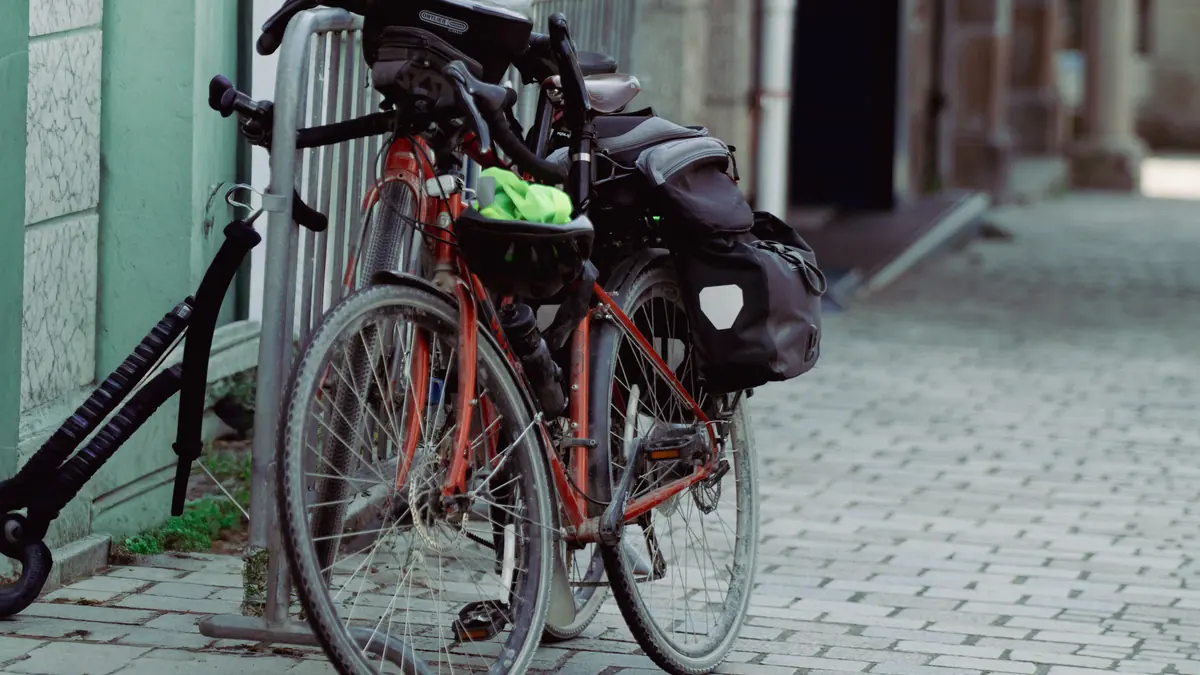
Laptop, lunch, a change of clothes: something has to carry them. A backpack costs nothing extra if you already own one and works for short, light loads. A rear rack with a pannier takes the weight off your back and keeps you cooler, which you will notice on longer or hillier rides. Whatever you choose, keep it clear of the wheels: rule 66 says you should not carry anything that affects your balance or could get tangled in your wheels or chain. That rules out shopping bags swinging from the handlebars.
Worth adding once you are riding regularly
After a couple of weeks you will know what your commute actually throws at you. These are the items most riders add next.
- A bell. Not a legal requirement for riding, as above, but the Highway Code recommends one, and on a shared path a ring is far friendlier than a shout.
- A helmet. A personal choice in law, and one many commuters make, particularly in city traffic. Our helmet guide covers fit and safety standards.
- A waterproof jacket. If you ride through the year, this is the clothing item that earns its keep. See our guide to choosing a waterproof cycling jacket, and cycling in the rain for the rest of a wet-weather routine.
- Trouser clips or a chain guard. Rule 59 also tells you to avoid clothes that can get tangled in the chain or a wheel. If you ride in work trousers, a clip or a band keeps the hem out of the chainring.
- A small multi-tool and chain lube. A multi-tool lets you tighten a slipping saddle or a loose bottle cage at the roadside. A clean, lubricated chain shifts better and wears more slowly; our guide to basic bike maintenance covers the five-minute weekly check.
What you can skip (for now)
Plenty of kit is marketed at commuters that most of them never need. None of this is bad; it just isn’t where your first spend should go.
- A cycling computer or GPS unit. You will ride the same route most days. A free map app on your phone handles the first few trips.
- Clipless pedals and cycling shoes. Useful on long, fast rides, less so when you want to walk into the office in the shoes you arrived in.
- Specialist cycling clothing from head to toe. For a short, steady commute, ordinary clothes and a jacket are fine. Our guide to what to wear cycling to work covers when it is worth changing.
- A second set of lights “just in case”. Better to buy one good set and charge it on a routine than two cheap sets you forget about.
- Gadgets for the sake of it. Phone mounts, handlebar bags and smart locks have their fans. Add them when a real problem on your commute calls for one, not before.
Match the kit to your commute
The essentials above cover most people, but where and when you ride shifts the priorities.
- Short, flat town commute, daylight only. A good lock and mudguards matter most. Keep a set of lights in your bag for the evening you leave late.
- Riding all year, including dark mornings. Lights move to the top of the list, followed by mudguards and a proper waterproof. A steady front light is the better choice on unlit stretches.
- Longer or rural routes. Puncture kit becomes non-negotiable, because the nearest station or bus stop may be a long walk. A rack and panniers will be kinder to your back than a heavy rucksack.
- Bike parked outside all day in a busy area. Spend more on the lock than you think you need, and take the lights and anything detachable with you.
If you are still choosing the bike itself, our guide to what makes a commuter bike explains which frames come ready for racks and mudguards, which saves buying workarounds later.
Buying accessories through Cycle to Work
If you are getting a bike through a salary sacrifice scheme, accessories can usually go into the same package, so you pay for them from gross salary rather than after tax. Government guidance lists safety equipment such as lights, locks, mudguards, panniers, pumps, cycle clips and helmets. HMRC’s examples exclude cycle computers and non-reflective waterproof clothing, and providers differ on clothing generally. The exact rules depend on your provider and employer. Our guide to what the Cycle to Work scheme covers goes through the official guidance, and the Cycle to Work scheme guide explains how the whole thing works.
Prices for all of this kit change often, so check current prices with retailers before you plan a package around a particular item.
Frequently asked questions
What bike accessories are legally required in the UK?
Only lighting kit, and only after dark. Between sunset and sunrise your bike must have a white front light, a red rear light, a red rear reflector and amber pedal reflectors (the pedal reflectors apply to bikes made after 1 October 1985). A helmet, a bell and mudguards are not legal requirements for riding.
Do I legally need a bell on my bike in the UK?
Not to ride it. The Pedal Bicycles (Safety) Regulations 2010 require a new, assembled bike to be supplied with a bell, but they regulate the sale, not your riding. The Highway Code recommends fitting one, and it is a cheap, useful courtesy on shared paths.
Is a helmet compulsory for cycling to work in the UK?
No. Highway Code rule 59 says you should wear a cycle helmet that fits and is fastened properly, but “should” marks advice rather than a legal requirement.
Can I buy commuting accessories through the Cycle to Work scheme?
Usually yes, as long as they are safety equipment or kit for the bike, such as lights, locks, mudguards, racks and helmets. Rules vary by provider and employer, so check what your scheme allows before you build a package.