Most bikes are not worn out, they are neglected. A bike that gets twenty minutes of attention a week runs quietly, brakes properly and lasts for years; one that gets none develops a creak, a sloppy gear and a worn chain that quietly chews through the rest of the drivetrain. You do not need to be a mechanic. You need a routine. Here is one that fits in the time it takes to drink a coffee.
The weekly twenty minutes
Do these five things once a week and you will catch almost every problem before it becomes a repair:
- Pump the tyres. Tyres lose pressure just sitting there. Soft tyres are slow, puncture more easily and ruin the handling.
- Wipe and lube the chain. A clean, oiled chain is the single biggest factor in a bike that feels good and lasts.
- Check the brakes. Squeeze each lever; the bike should stop firmly without the lever hitting the bar.
- Spin the wheels. Look for wobble and listen for rubbing. A quick spin tells you a lot.
- Do the M-check. A thirty-second once-over of the whole bike, explained below.
Tyres: two minutes
The correct pressure range is printed on the side of the tyre — it will say something like “55–75 psi” or a bar equivalent. Pump to within that range: nearer the top for smooth roads and lighter riders, nearer the bottom for comfort and grip. Check weekly, because even a healthy tyre drifts down over days. While the pump is out, glance at the tread and sidewalls for cuts or embedded grit.
The chain: five minutes
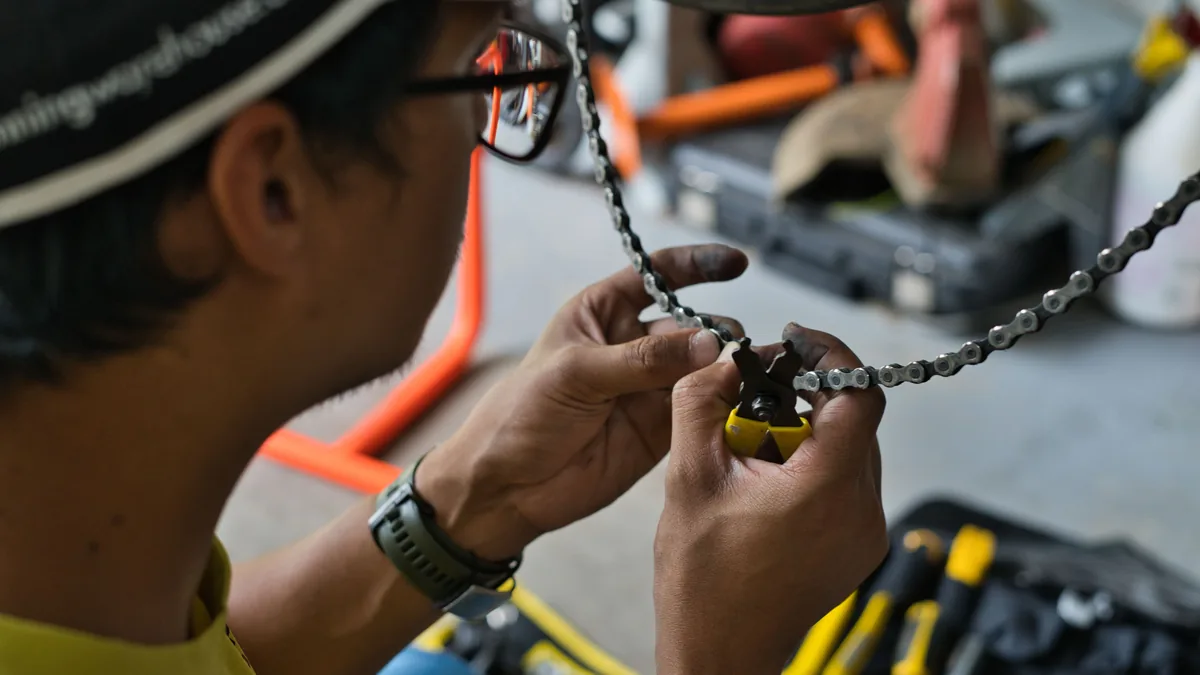
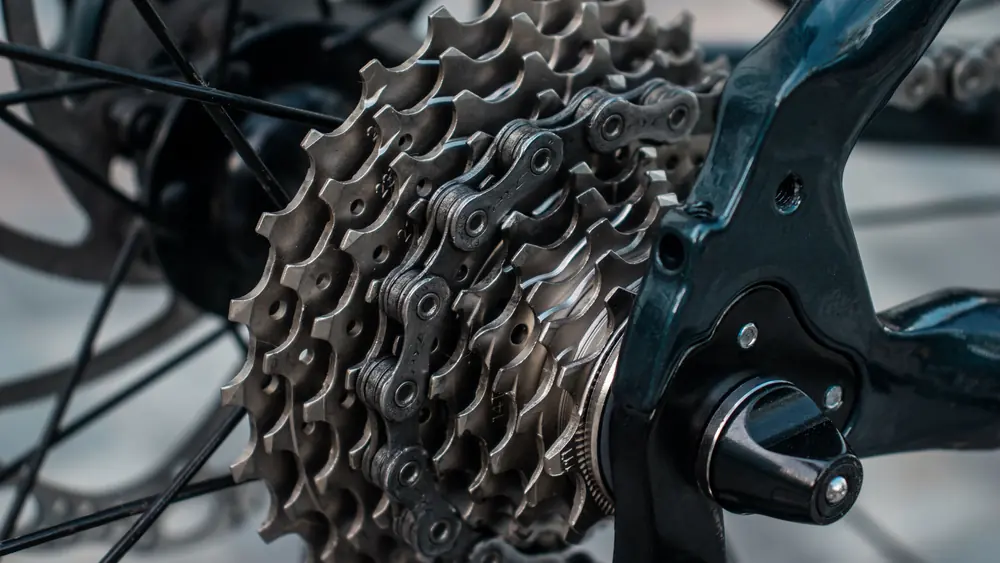
Back-pedal the chain through a dry rag to wipe off the black grime, then apply a drop of bike-specific lube to each link while back-pedalling, and finally wipe off the excess — lube belongs inside the rollers, not coating the outside where it collects dirt. Use wet lube in winter and dry lube in summer if you want to be tidy about it. A chain run dry wears fast and drags the cassette and chainrings down with it, turning a cheap part into an expensive one. If you do get a flat while you are out, our 15-minute puncture guide has the roadside fix.
Brakes: three minutes
Squeeze each lever. It should feel firm and stop the wheel well before reaching the handlebar. On rim brakes, look at the pads: if the grooves are nearly gone, replace them. On disc brakes, listen for scraping and check the pads are not down to the metal. Spongy levers or pads worn to nothing are the two things worth acting on immediately.
The M-check: the thirty-second habit
Start at the front wheel and trace an “M” shape over the bike: front wheel and tyre, up the forks to the handlebars, down to the bottom bracket and pedals, up to the saddle, then back down to the rear wheel. At each point give a quick wiggle and look: anything loose, cracked, worn or rubbing reveals itself. It is the same check a bike shop does first, and it takes half a minute once it is a habit.
What to leave to a shop
Twenty minutes a week handles the running maintenance. Once or twice a year, or whenever something feels wrong, a few jobs are worth handing over: gear indexing that will not stay tuned, wheels that need truing, worn bearings in the hubs, headset or bottom bracket, and brake bleeding on hydraulic discs. Catching these early — because your weekly check flagged them — is cheaper than ignoring them until something fails.
Winter needs a little more
Road salt and constant wet strip lube and corrode parts fast, so in winter clean and re-lube the chain more often and rinse salt off after wet rides. Our guide to cycling through a British winter covers the rest of the cold-weather kit.
Frequently asked questions
How often should I oil my bike chain?
Roughly once a week for regular riding, and more often in wet or winter conditions or if the chain looks dry or sounds noisy. Always wipe off the excess after applying lube so it does not attract dirt.
What tyre pressure should I use?
Use the range printed on the tyre sidewall. Go nearer the top of the range for smooth roads and lighter setups, and nearer the bottom for grip and comfort. Check weekly, as tyres lose pressure over time even when undamaged.
What is an M-check?
A quick safety check that traces an “M” shape over the bike — front wheel, bars, bottom bracket, saddle, rear wheel — looking and wiggling at each point for anything loose, worn or cracked. It takes about thirty seconds.
Can I do bike maintenance without tools?
The weekly routine needs very little: a pump, a rag and some chain lube. A basic multi-tool and tyre levers cover most of the rest. Jobs like wheel truing or bearing replacement are best left to a shop.
The point of the routine
Twenty minutes a week is not about being precious with the bike — it is about never being let down by it. Pump, lube, check, spin, M-check. Do that, fix punctures yourself with our 15-minute method, and your bike will outlast several that cost more.