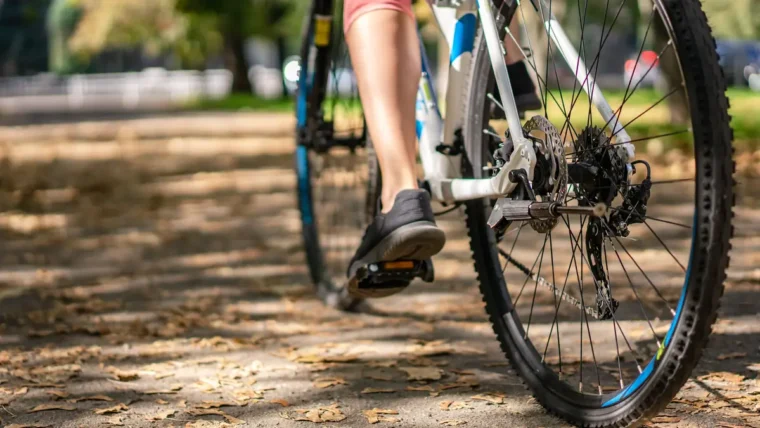
A flat tyre is the most common mechanical problem for commuters. Having the right pump — and knowing how to use it — gets you back on the road in minutes. Here is how the main options compare, and what to look for when you buy.
Which valve does your bike have?
Before you buy any pump, check your valve type. Get this wrong and the pump simply will not fit.
Schrader is the wider valve — the same diameter as those on car tyres. It has a threaded outer wall and a spring-loaded pin in the centre. You will find it on most hybrid, commuter, and mountain bikes. Schrader valves are also compatible with compressors at petrol station forecourts, which is handy if you are caught out far from home.
Presta is narrower and made entirely of metal. You will recognise it by the small threaded locknut at the top — unscrew that before you inflate. Road bikes and many modern gravel bikes use Presta valves. The thinner valve requires a smaller rim hole, which slightly strengthens the rim at the drilling point.
Dunlop (Woods) valves appear on older bikes, particularly those sold in the UK before the 1990s. They resemble a thicker Presta. Dunlop-compatible pumps are less common, but inexpensive adapters are widely available.
The safest choice for most commuters is a dual-head pump, which fits both Schrader and Presta without needing an adapter. The majority of modern floor pumps and many mini pumps are dual-head — check the product description to confirm.
Floor pumps: your main tool at home
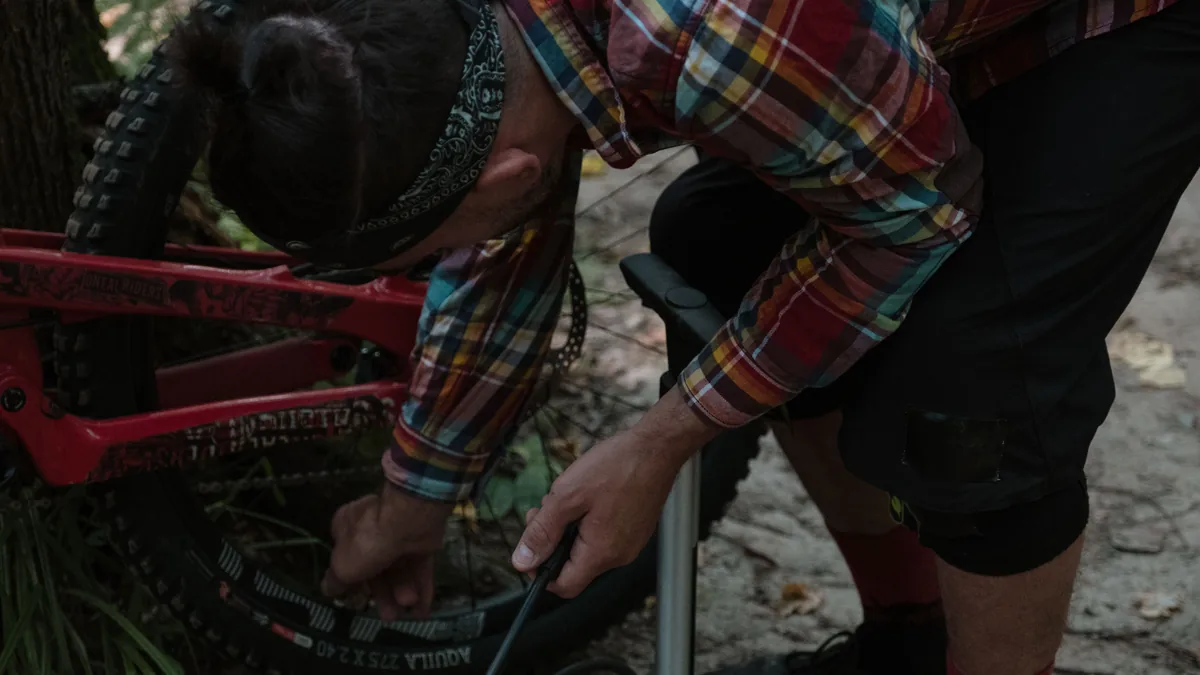
A floor pump (sometimes called a track pump) is what most commuters should own and use before every ride. You stand it on the ground, grip the handle, and push down. The large barrel moves a lot of air per stroke, so reaching the correct pressure takes under a minute for most tyres.
Key features to look for:
- Pressure gauge (manometer) — essential for reaching the right PSI. Analogue dials are generally more reliable than digital ones on budget pumps.
- Dual-head — fits Presta and Schrader without adapters.
- Stable base — a wide steel foot prevents the pump tipping while you push.
- Pressure rating — confirm the pump covers the PSI range printed on your tyre. Road tyres need a pump rated to at least 120 PSI; commuter and hybrid tyres typically need 40–70 PSI; MTB tyres need around 20–35 PSI.
Floor pumps are not portable — they stay at home or in a shed. That is fine, because you inflate before leaving, not at the roadside. Well-known brands include Topeak, SKS, and Lezyne; check current prices before buying.
Mini pumps: for emergencies on the road
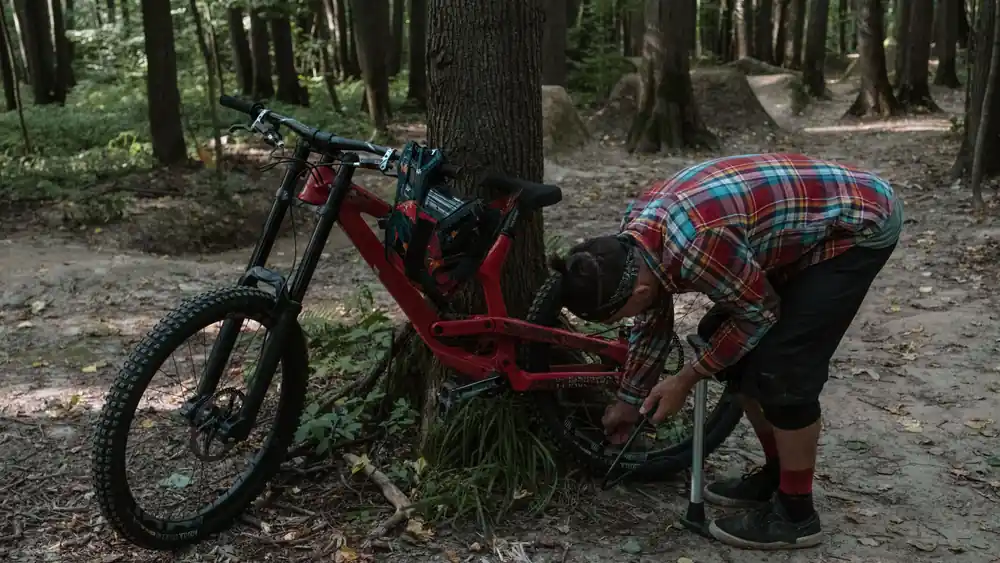
A mini pump is compact enough to fit in a saddle bag, jersey pocket, or backpack. After a puncture repair on the road, it will get you to rideable pressure — but it takes considerably more effort than a floor pump. The smaller barrel means more strokes per PSI, and getting to full pressure on a road tyre can be genuinely hard work.
What to look for in a mini pump:
- Dual-head — for the same reasons as above.
- Pressure rating — road cyclists need a mini pump rated to at least 120 PSI; commuters need 70 PSI minimum.
- Gauge — harder to find on very compact models, but useful so you do not significantly over- or under-inflate.
- Frame mount or bag compatibility — a frame mount keeps it accessible; most commuters prefer to keep it in a saddle bag.
Think of a mini pump as a backup. Inflate enough to ride to safety, then top up properly at home. Check current prices on models from brands such as Topeak, Lezyne, and Zéfal.
CO2 inflators: fast, but each cartridge is single-use
A CO2 inflator uses a compressed gas cartridge to inflate a tyre in seconds — no pumping required. That speed is appealing after a puncture in heavy rain or when you are running late. Standard road and narrow commuter tyres take a 16g cartridge; wider MTB tyres typically need a 25g cartridge.
The downsides are worth knowing before you rely on one:
- Each cartridge is single-use. Once empty, it is spent.
- You cannot fine-tune the pressure — if you overshoot, you cannot let the gas back in and reuse the cartridge. Look for an inflator with a trigger or flow valve so you can control the release rather than dumping the whole cartridge at once.
- CO2 can seep through latex inner tubes faster than air, so if you run latex tubes you will need to swap the gas out for air reasonably quickly.
Use a CO2 inflator as an emergency tool that sits alongside a patch kit or spare tube — not as a replacement for a floor pump at home.
What tyre pressure should you use?
The correct pressure for your tyres is printed on the sidewall — look for a marking such as “40–70 PSI” or “280–480 kPa”. Always stay within that range. The figures below are rough guides only, not substitutes for reading your actual tyre:
- Road bike tyres: approximately 80–120 PSI
- Hybrid and commuter tyres: approximately 40–70 PSI
- Mountain bike tyres: approximately 20–35 PSI
Running too low increases rolling resistance and the chance of pinch flats. Running too high makes the ride harsh and reduces grip on wet roads — relevant for UK commuting most of the year. The right number is on the tyre, not in a general guide.
Which combination makes sense for a commuter?
For most people: one floor pump with a gauge at home, and a compact mini pump in the bag for emergencies. That covers both situations at a reasonable cost. If you ride long distances or run road tyres, adding a CO2 inflator for fast emergency top-ups is reasonable — but keep the mini pump too, in case you get two punctures or the cartridge fails.
For more on keeping your bike running well between services, the basic bike maintenance guide covers the checks worth doing weekly. If you do get a flat on the road, the puncture repair guide walks through the full process step by step.
Frequently asked questions
Do I need a special pump for a Presta valve?
Yes. A standard Schrader pump head will not fit a Presta valve without an adapter. The simplest solution is a dual-head pump, which fits both valve types. Check the product description before buying — most modern floor pumps include this as standard.
What pressure should I inflate my commuter bike tyres to?
Check the tyre sidewall — the recommended range is printed there. Hybrid and commuter tyres typically sit between 40 and 70 PSI. Never exceed the maximum marked on the tyre.
Can I use a CO2 inflator as my main pump?
No. Each cartridge is single-use, so using one daily becomes expensive and wasteful quickly. Use a floor pump for regular inflation; the CO2 inflator is for roadside emergencies when speed matters.
Are electric bike pumps worth it for commuters?
Electric pumps need no effort and many stop automatically at the target pressure. They cost more and weigh more than manual options. For most commuters a quality floor pump is perfectly adequate; electric pumps are more useful for those who find manual pumping difficult, or who regularly inflate wide-tyred e-bikes.