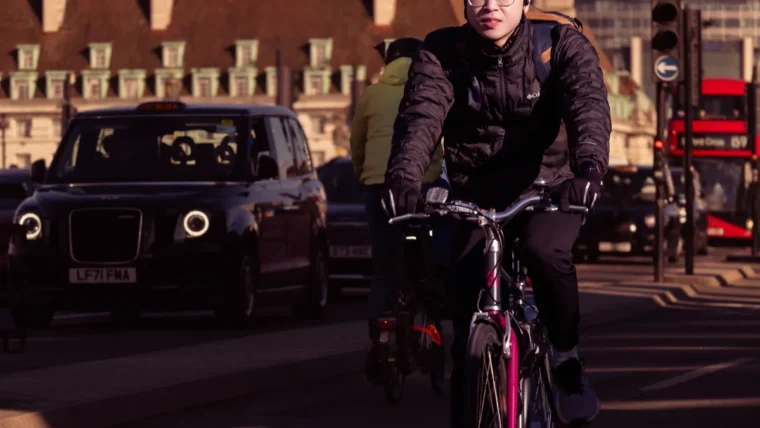
A waterproof cycling jacket for commuting does one specific job: keep rain out without turning into a sauna. Most jackets fail on one side or the other. This guide explains what the numbers on the label actually mean, and which features matter when you’re riding to work rather than racing across a mountain pass.
Waterproof rating: what the numbers mean
Waterproof ratings are measured in millimetres of hydrostatic head (HH) — the height of a water column the fabric can withstand before it starts to leak. For UK commuting, treat 10,000mm as the practical minimum for anything heavier than a light drizzle. A jacket rated at 5,000mm will handle a short shower; 20,000mm and above is rated for sustained downpours.
The rating tells you about the fabric, not the whole jacket. A high-HH shell with unsealed stitching will still leak at the seams. Check that the jacket has fully taped or critically taped seams — a rubberised tape bonded over the needle holes. Without taped seams, water finds its way through even premium membranes within minutes of heavy rain.
Breathability: the number that matters more for commuters
Pedalling generates heat and sweat continuously, even at a moderate commuting pace. A jacket that blocks rain perfectly but traps that moisture will leave you just as wet inside — just with warm, uncomfortable dampness instead of cold rain.
Breathability is measured in grams of water vapour that pass through one square metre of fabric in 24 hours (g/m²/24h). A rating of 10,000 g/m² or higher is generally considered suitable for aerobic activity. Lower ratings are fine for a brisk walk but often fall short for cycling, especially on a warm September morning.
The trade-off is real: higher breathability usually means a lighter, more expensive fabric, and it comes with lower waterproof ratings than fully welded expedition shells. For a 20-minute urban commute in steady UK rain, a well-ventilated 10,000/10,000 jacket typically outperforms a 20,000/5,000 mountain shell.
DWR coating: rain running off is not the same as being waterproof
Most cycling jackets have a Durable Water Repellent (DWR) finish applied to the outer fabric. When it works, rain beads up and rolls off rather than soaking into the shell — which helps breathability by keeping the outer fabric dry and permeable.
DWR wears off with use and washing. The fix is simple: wash the jacket according to the label (heat activates DWR) and re-proof with a wash-in or spray-on product such as Nikwax TX.Direct. If you find water soaking into the fabric rather than beading, that is a DWR issue, not a waterproof membrane failure. Re-proofing is a ten-minute job and extends jacket life considerably.
Features worth checking before you buy
Technical ratings matter, but so does whether the jacket actually works on a bike:
- Dropped rear hem. Longer at the back to cover you when bent over the bars. Short hems that are fine for walking let rain straight onto your back on a road bike position.
- Accessible pockets. Chest or upper arm pockets you can reach without pulling over. Hip pockets sit under your hands on the hoods and are almost unusable while riding.
- Packable design. A jacket that packs into its own pocket or a small bag fits inside a handlebar bag or jersey pocket. Useful on days when rain is likely but not certain.
- Reflective panels. Most dedicated cycling jackets include retroreflective strips on the back and arms. More matters more than position: a panel visible to a driver overtaking at 30 mph is at the rear of the jacket or on the arms.
- Storm-proof zips. Water-resistant zip pulls and protective baffle strips over the main zip. Ordinary zip teeth leak in sustained rain.
- Articulated cut. A jacket cut for walking bunches up around the shoulders when you ride. An articulated or cycling-specific cut allows full arm extension without pulling at the back.
One feature to be sceptical about: “windproof” used without a waterproof rating. A windproof shell stops the wind chill but does not stop rain. Useful in dry cold, not in a British autumn shower.
Hi-visibility and the Highway Code
Wearing hi-visibility clothing is not a legal requirement for cyclists in the UK. The Highway Code Rule 59 states that light-coloured or fluorescent clothing “can help other road users see you in daylight and poor light”, and that reflective clothing and accessories can increase visibility in the dark. The word used is “should”, not “must” — it is a recommendation, not an obligation.
That said, a bright yellow or orange jacket with retroreflective trim does make you more visible at dawn, dusk, and in rain. If you’re undecided between a black jacket and an equivalent in high-vis yellow, the yellow is the practical choice for commuting — especially in autumn and winter. Many cycling jackets solve this by including reflective elements on an otherwise muted colour, which is a reasonable compromise if you prefer not to arrive at the office looking like a construction worker.
For more on what to pack in general for the ride in, see What to Wear Cycling to Work. If you’re specifically preparing for wet conditions, Cycling in the Rain covers braking, visibility, and bike setup for wet roads.
Layering: jacket or rain cape?
A full waterproof jacket is the most versatile option but not the only one. Rain capes — a poncho-style shell that drapes over the bars — offer excellent coverage and ventilation but are impractical above about 15 mph and in wind. Gilets (sleeveless vests) are useless in rain but valuable on cold dry mornings when you want wind protection without overheating.
For most UK commutes, a packable waterproof jacket worn over a merino base layer or a light fleece covers the majority of conditions. A separate thermal jacket or a softshell is worth adding to the kit only if your commute runs through November to February; for milder months, a single good waterproof is often sufficient.
If you’re new to cycling to work and weighing up the full kit requirement, the beginner’s guide to cycling to work covers the essentials without overcomplicating the kit list.
FAQ
What waterproof rating do I need for UK cycling commuting?
A minimum of 10,000mm hydrostatic head handles the majority of UK rain. Paired with taped seams and a DWR coating, this is sufficient for daily commuting. Ratings below 5,000mm are adequate only for brief light drizzle.
Is a cycling-specific jacket necessary or will any waterproof do?
Any waterproof jacket will keep rain out, but a cycling-specific cut makes a noticeable difference. It has a dropped rear hem to cover your back when bent over, an articulated shoulder cut for arm reach, and pockets positioned where you can actually access them while riding. A walking jacket tends to ride up, bunch at the shoulders, and have hip pockets that are unusable on a bike.
Do I have to wear hi-vis to cycle in the UK?
No. Highway Code Rule 59 recommends high-visibility and reflective clothing but does not make it a legal requirement. You are not fined or penalised for cycling without hi-vis gear. That said, retroreflective elements significantly increase your visibility to drivers in low light.
How do I restore a waterproof jacket that is no longer beading water?
This is usually a DWR issue, not a membrane failure. Wash the jacket according to its care label — heat (tumble dry or warm iron on low) often reactivates the DWR. If beading does not return, apply a wash-in reproofing product. Check current prices on products such as Nikwax TX.Direct at outdoor retailers.