If your commute involves a train, Tube, or bus leg, a folding bike is almost certainly worth considering. You can take it on any TfL service at any time with no peak-hour restrictions, avoid the timetable constraints that apply to full-size bikes on National Rail, and fold it neatly under your desk or into a locker at the other end. If you cycle the whole way with no public transport involved, a standard commuter bike will usually serve you better.
That is the short answer. What follows covers the specifics: transport rules, wheel size, weight, Cycle to Work eligibility, and the honest trade-offs to know before you commit.
Why folding bikes work for multi-modal commutes
A folding bike solves the first and last mile. If you live a mile from the station and work a mile from your stop, a folder lets you ride those gaps without adding a separate journey. When folded, it travels with you as hand luggage — no advance booking, no bike rack, no leaving it locked outside all day.
That last point matters more than it first appears. Bike theft is a persistent problem across UK cities. A folder goes with you everywhere, which removes the risk entirely.
The trade-off against a full-size commuter bike is mostly ride feel. Smaller wheels and a folding frame deliver a different experience — manageable over a few miles, but more demanding over longer distances. If you are cycling the full route rather than mixing with public transport, a full-size bike is almost always more comfortable for the same effort.
TfL and National Rail: what the rules actually say
This is where folding bikes hold a clear, practical advantage.
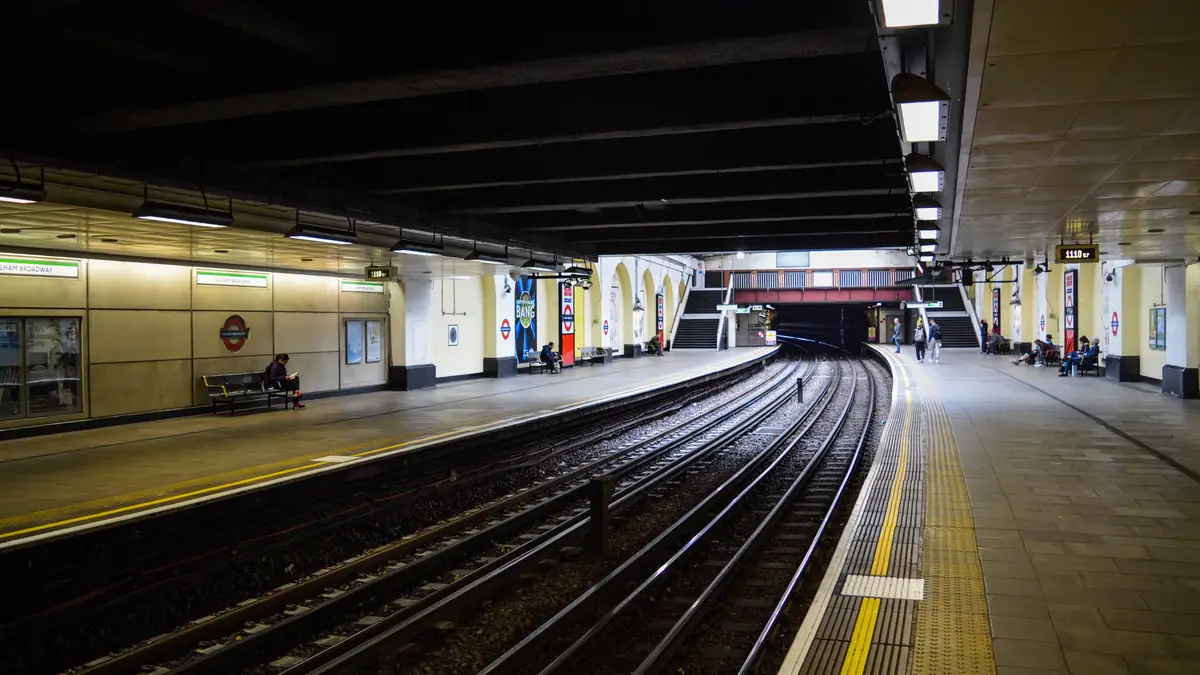
According to Transport for London, folding bicycles are permitted at all times on all TfL services — Tube, Bus, DLR, Tram, London Overground, and the Elizabeth line — as long as they are folded when on board. There are no peak-hour restrictions. On the London Overground and Elizabeth line, there is a limit of one folded bike per vestibule area during peak times, but that is the only constraint that applies.
Non-folding bikes face different rules entirely. They are restricted from TfL rail services during peak hours on weekdays and, on National Rail, are typically banned between 07:30–09:30 and 16:00–19:00 Monday to Friday (excluding public holidays), with variation by operator.
Folding bikes on National Rail can generally be carried at any time when folded. Most operators require the bike to be folded and, in some cases, bagged. The practical upshot: a folded bike does not count as a cycle for the purposes of carry restrictions. Check your specific train operator’s conditions before travelling, as exact wording varies.
One point worth noting for anyone considering an electric folder: Transport for London introduced a ban on non-folded e-bikes across its network in March 2025. Folded e-bikes remain permitted under the same rules as standard folded bikes.
16-inch vs 20-inch wheels: which suits your route?
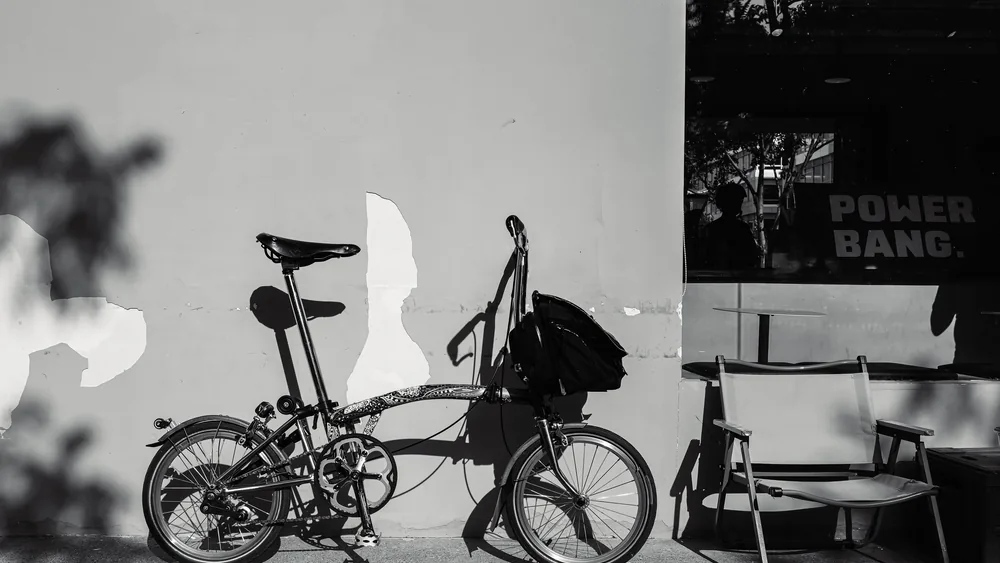
Most folding bikes use either 16-inch or 20-inch wheels. The choice affects how the bike rides, how small it folds, and what accessories you can fit.
16-inch (compact folders)
16-inch folders, typified by the Brompton-style design, fold to a smaller package — roughly the size of a large holdall. They fit under most Tube and train seats, which matters when carriages are packed. The fold on well-designed models takes around 20 seconds once practiced.
The limitation is ride quality on rougher surfaces. Smaller wheels transmit more vibration from cracks and potholes. On smooth tarmac this is barely noticeable; on typical British city roads, it becomes more apparent over rides longer than three or four miles.
20-inch (mid-size folders)
20-inch folders offer a noticeably more comfortable ride, particularly over commutes in the three to ten mile range. They handle road imperfections better than smaller wheels and tend to have a wider range of compatible accessories — racks, mudguards, and tyre options are easier to source.
The folded package is larger. It will fit comfortably in a luggage area or at your feet on a train, but it is less convenient under a seat or in a cramped hallway.
If your commute is primarily public transport with short cycling at each end, a 16-inch folder makes more sense. If you are cycling five miles or more and the transit element is secondary, a 20-inch is likely more practical on the road.
Weight and what it means in practice
Typical folding bikes weigh between 9 and 13 kg depending on frame material and specification. Steel-framed models sit towards the heavier end; aluminium and titanium bring weights down significantly.
For commuting, weight matters most when you are carrying the bike rather than riding it: up station stairs, through ticket barriers, into a lift, or stowing it under a desk. A 12 kg bike is manageable for a single daily carry; carried repeatedly or up multiple flights of stairs, the weight becomes more noticeable over time.
Lighter models exist but come at a higher price. Check current specifications and pricing directly with retailers — folding bike ranges change regularly and specifications should be verified before buying.
Folding bikes and the Cycle to Work scheme
Folding bikes are fully eligible under the Cycle to Work scheme. Cyclescheme, one of the UK’s largest providers, confirms that folding bikes — standard and electric — can be purchased through the scheme in exactly the same way as any other bicycle.
The standard eligibility rules apply. You must be employed (the scheme is unavailable to sole traders and the self-employed), and the bike should be used for qualifying journeys — cycling to or from work — at least 50% of the time.
The salary sacrifice arrangement reduces the effective cost by spreading payments from gross salary before tax and National Insurance. The exact saving depends on your income tax band. For a worked example and to estimate your personal saving, see is the Cycle to Work scheme worth it, or read about how the scheme works in full.
The honest trade-offs
A folding bike is genuinely useful for a specific type of commute. It is not the right choice for every situation.
- Best for multi-modal journeys. If you cycle the full route without public transport, a full-size commuter bike is more comfortable and more efficient.
- Ride quality is a real compromise on rougher roads. The better models ride well even on uneven surfaces, but they cost more. Do not expect a cheap folder to feel like a standard hybrid.
- Folding takes practice. Most mechanisms become quick and natural after a few weeks, but the early days feel awkward.
- Gearing is sometimes limited on entry-level models. Flat urban routes are fine; anything hilly benefits from a wider gear range. Check specifications before buying.
- Electric folders are an option. They are permitted on TfL services when folded, they are Cycle to Work eligible, and they remove hills from the equation. The trade-off is weight — electric folders typically weigh 15 kg or more. The full picture on commuting with e-bikes is in the e-bike commuting guide.
FAQ
Are folding bikes allowed on the London Underground during peak hours?
Yes. Transport for London permits folding bikes at all times on all TfL services — Tube, Bus, DLR, Tram, London Overground, and Elizabeth line — as long as they are folded. There is no peak-hour restriction for folded bikes. On the Overground and Elizabeth line there is a limit of one folded bike per vestibule at peak times.
Can you use the Cycle to Work scheme to buy a folding bike?
Yes. Folding bikes are fully eligible under the Cycle to Work scheme, including through providers such as Cyclescheme. You must be an employee (not self-employed), and the bike should be used for qualifying journeys at least 50% of the time.
What is the difference between a 16-inch and 20-inch folding bike for commuting?
A 16-inch folder folds to a smaller, more portable package and fits under most transit seats — the better choice for heavy Tube or bus use and tight storage. A 20-inch folder rides more comfortably over longer distances and has wider accessory compatibility, but its folded size is larger.