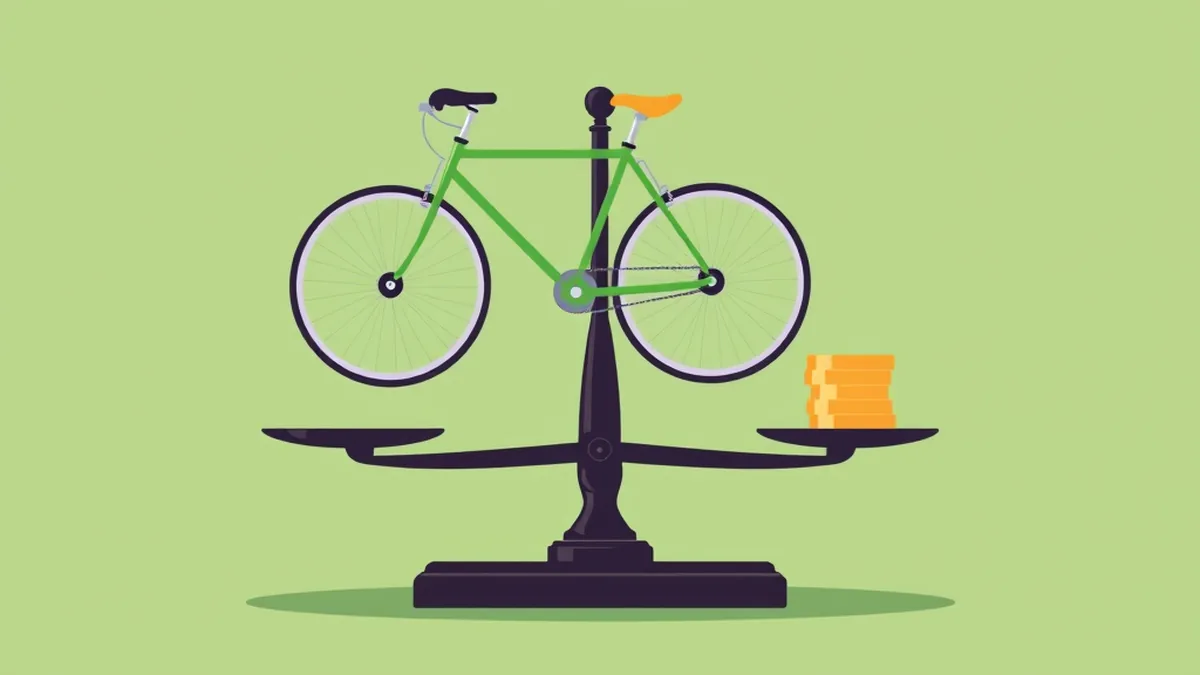
“Is the Cycle to Work scheme actually worth it?” is the right question to ask, because the answer is not always yes. For most taxpayers it saves a genuine chunk of money, but the size of the saving depends on your tax band, what you ride, and — the part people forget — how your employer handles the end of the hire. This guide gives you the honest version, with a calculator so you can see your own numbers.
Work out your figure first, then read on for the catches.
Where the saving comes from
The scheme is salary sacrifice: your employer buys the bike and you hire it from them, with the cost taken from your gross pay before income tax and National Insurance. Because you never pay tax on that slice of salary, you save at your marginal rate:
- Basic-rate taxpayer: 20% tax + 8% National Insurance = about 28% off.
- Higher-rate taxpayer: 40% + 2% = about 42% off.
- Additional-rate taxpayer: 45% + 2% = about 47% off.
So on a £1,000 bike, a basic-rate taxpayer saves roughly £280 and a higher-rate taxpayer roughly £420 — before the end-of-hire cost, which we come to below.
The catches that eat into the saving
The headline percentage is not the whole story. Three things reduce it:
- You are hiring, not buying. During the hire period the bike belongs to your employer. To own it, most people pay a small amount at the end — see our end of hire guide for exactly how that works and what it costs.
- The minimum wage floor. Salary sacrifice cannot take your pay below the National Minimum Wage (£12.71 an hour from April 2026 for over-21s). On a modest salary, that caps how much bike your employer will let you sacrifice.
- It only pays off if you ride it. The saving is real, but a bike bought on impulse and left in the shed is money spent, not saved.
Who it is clearly worth it for
The scheme makes the most sense if you:
- pay income tax (the higher your band, the bigger the saving);
- will actually commute or ride regularly;
- want a bike, e-bike or accessories you would otherwise buy anyway;
- have an employer whose end-of-hire terms are reasonable.
For a higher-rate taxpayer buying an e-bike they will ride to work, the maths is hard to argue with: the saving on a pricey e-bike can run to several hundred pounds. Our e-bike buyer’s guide covers choosing one.
When it might not be worth it
Be honest with yourself if you:
- earn below the personal allowance (£12,570) — you pay no income tax or NI, so there is no tax to save;
- are near the minimum wage, where the sacrifice may be capped or push you below the floor;
- are not sure you will keep riding;
- could buy the same bike cheaper in a sale, since the scheme is usually full retail price minus your tax saving, not a discount on top of a discount.
How to get the real number
Use the calculator above with your actual salary and the price of the bike and accessories you want. Then ask your employer’s scheme provider one question: what do I pay at the end to own the bike? Subtract that from the saving the calculator shows, and you have the true figure. Our provider comparison explains why that end-of-hire answer differs between providers.
Frequently asked questions
Is the Cycle to Work scheme worth it for a basic-rate taxpayer?
Usually yes. A basic-rate taxpayer saves around 28% (20% income tax plus 8% National Insurance) on the bike and accessories, less whatever they pay at the end of the hire to own it. If you will ride the bike, that is a solid saving.
What is the catch with Cycle to Work?
The main one is that you are hiring the bike, not buying it, so to own it outright you normally pay a small end-of-hire amount based on HMRC’s valuation table. The other catches are the minimum-wage floor on salary sacrifice and the fact that the saving only matters if you actually use the bike.
Can I save money if I earn below the personal allowance?
No. If your income is below £12,570 you pay no income tax or National Insurance, so there is nothing to save through salary sacrifice, and the deduction must not take your pay below the minimum wage.
Is an e-bike worth it on the scheme?
Often it is the best use of the scheme, because e-bikes are expensive and the percentage saving is applied to a bigger price. Check your employer allows the value you need, as there is no scheme-wide spending limit but individual schemes can set one.
The bottom line
For most taxpayers who will ride, the Cycle to Work scheme is worth it — just run your own numbers and find out the end-of-hire cost before you commit. Start with the calculator above, then read how ownership works at the end of the hire period.