For most commuters replacing a car journey or a transit pass, an e-bike makes financial sense over time. The electricity cost is negligible, the Cycle to Work scheme reduces the upfront price substantially, and you arrive without the parking frustration. Whether it works for you depends on your commute distance, how you store the bike, and how you feel about riding in UK weather. Here is the honest breakdown.
What makes an e-bike legal in the UK
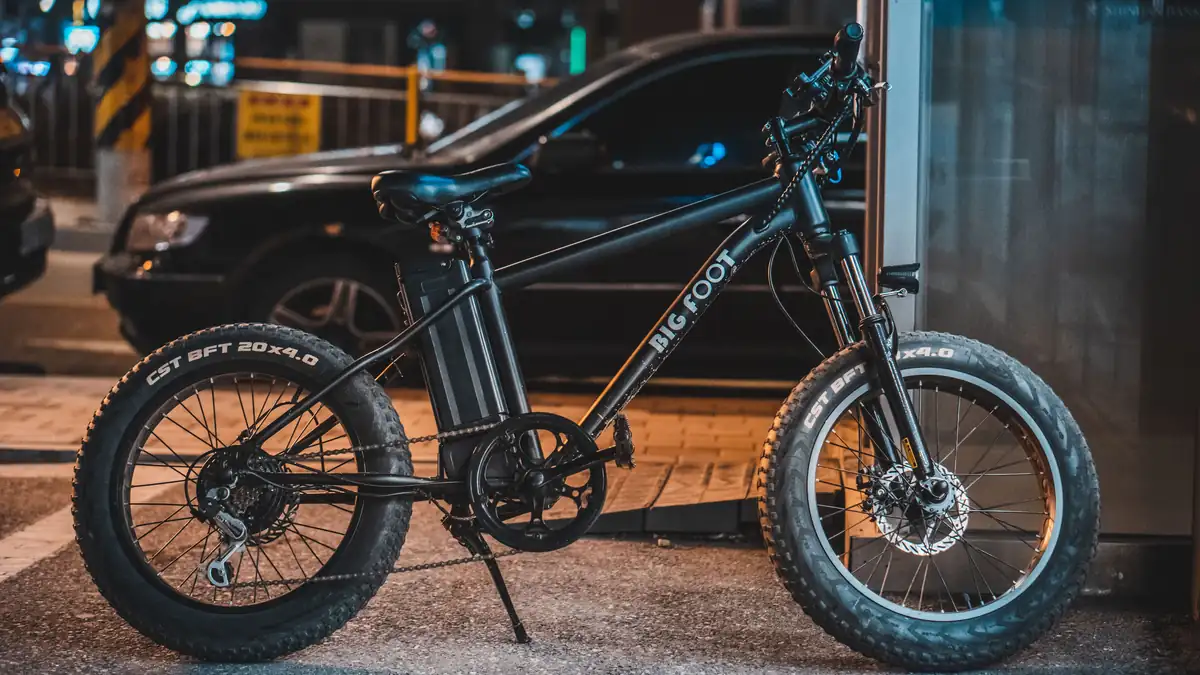
This article covers EAPC-compliant electric bikes — the type you can ride without a licence, insurance, or registration. Under UK law (GOV.UK), an electric bike qualifies as an Electrically Assisted Pedal Cycle if:
- The motor has a maximum continuous rated power output of no more than 250 watts
- The motor stops providing assistance at 15.5mph (25km/h)
- The bike has pedals that can propel it
- The rider is at least 14 years old
An EAPC can be ridden on cycle paths and anywhere pedal bikes are allowed. You cannot ride it on the pavement.
Not every bike sold as an “e-bike” meets these rules. Some models have higher-powered motors or throttle-only operation, which classifies them as mopeds and requires a licence, registration, tax, and insurance. Always check the motor power output and speed settings in the specifications before buying.
Running costs: the strongest argument
E-bikes typically use 10–25 Wh per mile. At the current Ofgem electricity unit rate of 26.11p per kWh (Q3 2026, July–September), a 10-mile round-trip commute costs roughly 4p in electricity. Over 230 working days, that is around £9 per year for a 10-mile daily commute.
Even when you factor in a replacement battery at some point in the bike’s life (check current price at your chosen retailer), the annual running cost stays well below a monthly bus or rail pass for most commuters.
For your own numbers, use the Electric Bike Running Cost Calculator — it lets you enter your actual distance and battery capacity. To compare the e-bike against the cost of driving, try the Commute Cost Calculator.

The Cycle to Work scheme
EAPC-compliant e-bikes are fully eligible for the Cycle to Work scheme. PAYE employees can pay for a bike through salary sacrifice, saving income tax and National Insurance on the cost. Depending on your tax band and employer, savings typically range from around 25% to 47% of the purchase price.
There has been no upper spending limit on the scheme since 2019 — provided your employer uses an FCA-authorised provider. That matters for e-bikes, which are generally more expensive than entry-level pedal bikes. See our Cycle to Work Scheme guide for how the savings work, or Eligibility, Limits & Rules for what qualifies.
What the motor actually does for a commute
The assist addresses two specific problems: hills and distance.
A flat 3-mile commute on a regular bike is manageable for most people. Add a sustained climb or extend the distance to 10 miles, and the picture changes — sweaty arrivals, longer journey times, or both. An e-bike motor keeps the effort in a comfortable range regardless of terrain, which is why the bikes are particularly popular on hilly routes or longer commutes.
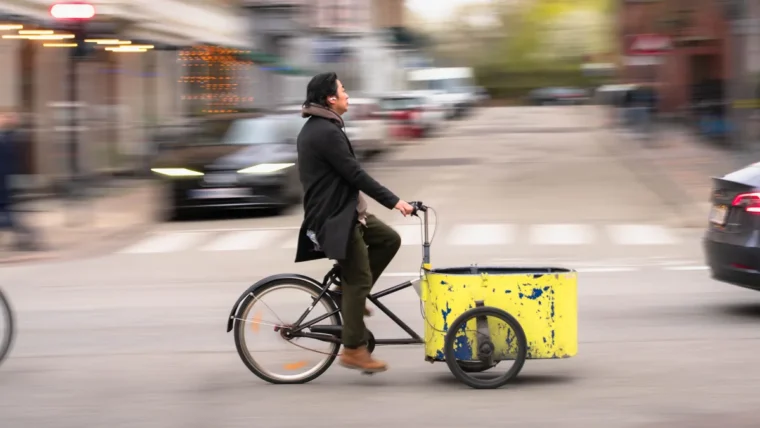
In stop-start city traffic, e-bike commuters typically move at a pace that competes with the average car. You skip the parking search, avoid fuel costs, and — on many urban routes — you arrive in similar or less time than you would by car or bus.
The honest downsides
Upfront cost
Decent EAPC-compliant commuter e-bikes cost considerably more than equivalent pedal bikes. Prices vary widely by specification and brand — check current prices before budgeting. The Cycle to Work scheme reduces the hit, but it does not eliminate it: you still pay the hire cost through payroll, and there may be an end-of-hire ownership fee.
Theft is a real risk
A more expensive bike draws more attention. A Sold Secure Gold or higher D-lock (check current price) is the starting point; add a secondary cable or chain for the frame and rear wheel if you are leaving the bike on the street. If you can bring it inside — into your office, a secure cycle store, or your home — the risk drops considerably.
If you genuinely have nowhere secure to store the bike at either end of your commute, that deserves honest consideration before buying. See How to Lock Your Bike and Beat Thieves for rated lock types and correct locking technique.
Cold weather reduces range
Lithium batteries lose capacity in cold conditions, so winter commutes typically yield fewer miles per charge. The motor still functions; the battery just depletes more quickly. For most commutes under 15 miles this is manageable — charging the night before rather than running the battery low helps on cold mornings.
Weight
E-bikes are considerably heavier than unassisted bikes. That matters if you need to carry one up stairs or lift it onto a train. Lightweight models exist but cost more — check current prices if weight is a genuine constraint.
Maintenance and repair
The motor, battery, controller, and display add components that not every bike shop routinely services. Day-to-day maintenance — chain, tyres, brakes — is similar to any bike, but electrical faults may need a specialist and parts can take time to source. Factor in potential repair costs, particularly as the bike ages.
Who benefits most
E-bike commuting tends to make the strongest case for:
- Longer commutes (roughly 5–20 miles) where the motor closes the gap in time and effort versus driving
- Hilly routes where pedalling alone is impractical or exhausting
- People replacing a car, where fuel and parking savings are largest relative to the bike cost
- PAYE employees who can use the Cycle to Work scheme to reduce and spread the upfront cost
- People returning to cycling who want to build confidence or cover distances they wouldn’t attempt on a regular bike
If your commute is 2 miles and flat, a regular hybrid bike is lighter, cheaper, and simpler to maintain. If you are switching from public transport rather than a car, the financial break-even takes longer — run the comparison using the Commute Cost Calculator before deciding.
If you are new to cycling to work, How to Start Cycling to Work covers the practical side: route choice, what to carry, and how to make the routine stick. For an overview of e-bike types and what to look for in a commuter model, see our Electric Bikes UK Buyer’s Guide.
Frequently asked questions
Are electric bikes legal to ride in the UK without a licence?
Yes, if the bike meets EAPC standards: motor up to 250W, assistance that stops at 15.5mph, and pedals. You must be at least 14. No licence, insurance, or road tax is required. The full rules are on GOV.UK.
Can I buy an e-bike through the Cycle to Work scheme?
Yes. EAPC-compliant e-bikes are fully eligible. The scheme is open to PAYE employees, and since 2019 there is no upper spending limit when your employer’s provider is FCA-authorised.
How much does it cost to charge an e-bike?
Very little. E-bikes typically use 10–25 Wh per mile. At the current Ofgem electricity unit rate of 26.11p per kWh (Q3 2026), a 10-mile round-trip costs roughly 4p. Use the Electric Bike Running Cost Calculator for your own distance and battery size.
Does cold weather affect e-bike range?
Yes. Cold reduces lithium battery output, so you get fewer miles per charge in winter. The motor itself is unaffected — you simply need to charge more frequently when temperatures drop.
Is an e-bike faster than the bus or tube?
For many city commutes of 5–12 miles, door-to-door, often yes. It depends entirely on your specific route, service frequency, and local congestion. Worth timing a trial ride before committing.