The best commuter bike is the one that suits your route, not the one your colleague swears by. For most people cycling to work in the UK, that means a hybrid — an upright, versatile machine that handles pot-holed roads, light cycle paths and wet mornings without much fuss. If your commute involves a train, a folding bike changes the equation. If the hills are grinding you down, an e-bike now makes practical sense at prices that weren’t available a few years ago.
This guide covers the main types, what to check before buying, and some bikes across different budgets worth investigating — all info-only, with no “we tested” claims and prices pointing you to current retail since they shift regularly.
Which type of bike suits your commute?
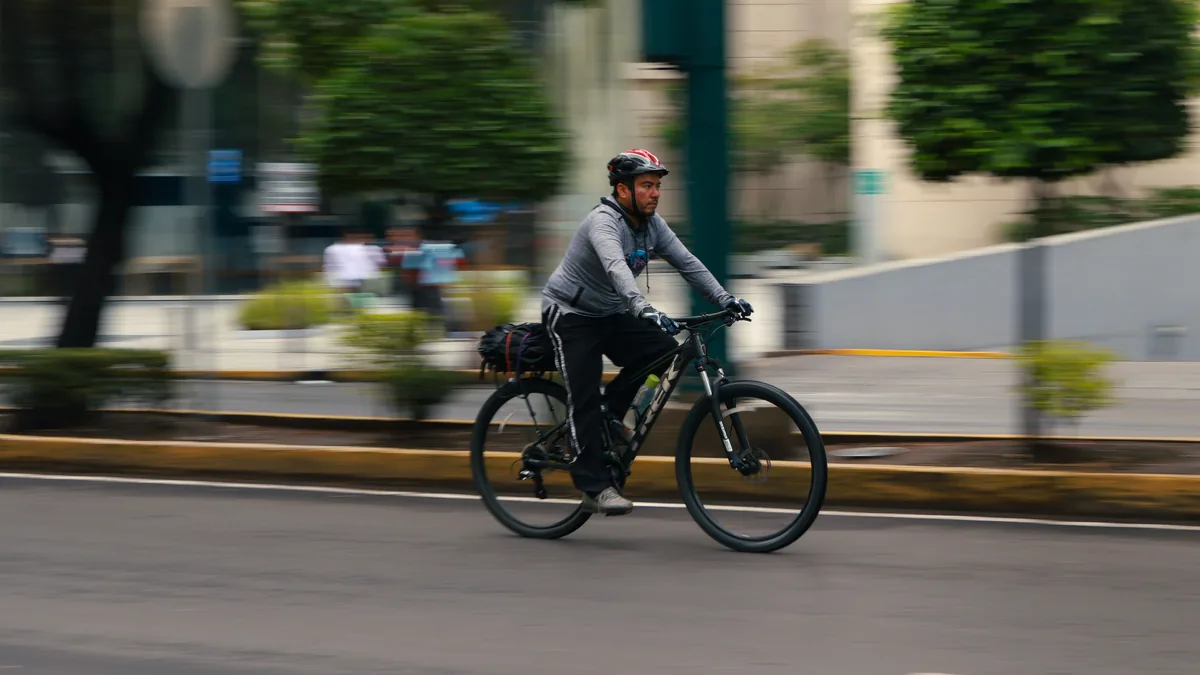
Hybrid / flat-bar road bike
The default choice for a reason. A hybrid puts you in an upright position, accepts wider tyres than a road bike (typically 32–40mm), and almost always has mudguard and rack mounts. The geometry balances speed with comfort, so a 5-mile daily ride doesn’t wear you out. Disc brakes have become common even at mid-range prices, which matters on wet British roads.
Worth knowing: “hybrid” covers a wide range. A fitness hybrid leans toward speed — narrower tyres, sometimes almost as aggressive as a road bike. A city hybrid prioritises upright comfort and carrying capacity. Decide which end of that spectrum suits you before you start comparing.
Folding bike
If part of your commute involves a train or the Tube, a folder is often the practical answer. Brompton’s 16-inch wheels fold into a package you can carry onto a train without a separate bike ticket. 20-inch wheel folders from brands like Tern and Dahon are faster on open roads but bulkier when folded.
The trade-off: folders weigh more per frame than comparably specced standard bikes, and ride feel at speed is different — not worse, but different. If you never actually fold it, you’re carrying unnecessary weight.
E-bike (electric-assisted)
An e-bike transforms longer commutes and hilly routes. In the UK, road-legal e-bikes (EAPCs) are limited to 250W motors with pedal assistance up to 15.5 mph — no licence, no insurance and no road tax required under current UK law (GOV.UK). The assist means you arrive without needing a shower, which genuinely changes the calculation for many commuters.
Running costs are low: see our Electric Bike Running Cost calculator for real numbers based on current Ofgem rates. Upfront prices are higher, typically starting around £1,200 for entry-level models and climbing to £3,500+ for well-specced machines. For a fuller look at whether one makes sense for commuting, read our Are E-Bikes Worth It for Commuting? guide.
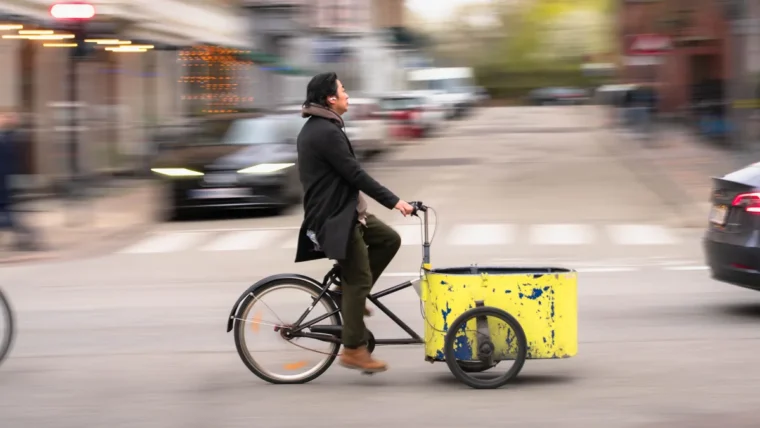
City / Dutch bike
Heavier and more upright than a hybrid, city bikes are engineered for relaxed, flat urban commutes. They often come ready-equipped with a dynamo, integrated lights, full mudguards, a rear rack and a chainguard as standard — you just ride them. Think of them as commuter appliances: slow to maintain, hard to break, presentable locked outside a café. For routes that are short and flat, the extra weight is irrelevant.
Road or gravel bike
If you’re covering 15+ miles each way and speed is the priority, a drop-bar road or gravel bike is faster and more efficient. The trade-off is mudguard clearance (check the spec before buying) and a less forgiving ride on rough urban tarmac. Gravel bikes now offer wide tyre clearance and more mounting options than pure road bikes, which makes them a reasonable commuting platform if you already own one. See our Hybrid vs Road Bike comparison for a fuller breakdown.
What to look for before you buy
Mudguard mounts
The single most important commuter-specific feature. Check the frame has eyelets — threaded holes on the fork and rear dropout — where mudguard stays bolt on. “Full mudguard compatible” in a spec sheet means the tyre clearance is wide enough to fit a mudguard behind the tyre. Clip-on mudguards exist but they’re noisier, less secure, and cover less of the wheel.
Rear rack mounts
If you’re carrying a bag to work, panniers attached to a rear rack are more stable and easier on your back than a rucksack. Look for braze-on rack mounts on the seatstays and near the rear axle. Road bikes generally don’t have these — check the geometry chart or ask the shop before buying.
Disc brakes
In wet conditions, rim brakes lose stopping power noticeably. Disc brakes — hydraulic or mechanical — deliver consistent performance in rain and mud. Hydraulic discs require less hand force and are more self-adjusting; mechanical discs are cheaper to service at home. For UK commuting, disc brakes are worth prioritising if the budget stretches.
Tyre width
32mm is a sensible minimum for city roads. 35–40mm absorbs potholes better and grips better in the wet. Very narrow road tyres (23–25mm) are fast but punishing on the potholed urban surfaces common in British cities.
Gearing: derailleur vs hub gear
Most bikes use derailleur gears — lighter, more efficient, but exposed to the elements and needing regular cleaning and adjustment. Hub gears (Shimano Nexus, Alfine, SRAM) are sealed, low-maintenance, and you can change gear at a standstill. They suit urban stop-start riding well. The downside: heavier, and fewer gear ratios at a given price point.
Frame material
Aluminium is the default at this price range — light, stiff, corrosion-resistant and affordable. Steel is heavier but absorbs road vibration slightly better and is easier to repair if damaged. Carbon is impractical for a bike you’re locking outside in all weathers.
How much should you spend?
Under £400: Options narrow quickly. Expect heavier frames, rim brakes, and basic gearing. Serviceable for short flat commutes; expect more frequent maintenance. At this level, a used bike from a reputable shop can outperform a new one.
£400–£800: The sweet spot for most commuters. Aluminium frames, mechanical disc brakes at the upper end, decent Shimano groupsets. Good value here, especially if you can stretch to £600+.
£800–£1,500: Hydraulic disc brakes, better wheels, smoother shifting. Some full commuter builds come with mudguards and rack included in this bracket. Entry-level e-bikes start appearing from around £1,200.
£1,500+: Quality e-bikes, premium hybrids with complete commuter setups, belt-drive bikes with hub gears. Higher upfront cost but lower long-term maintenance, especially with hub gears and belt drive.
Bikes worth looking at
These are research starting points, not recommendations based on testing. Specs and prices change — always check the manufacturer’s current site before buying.
Specialized Sirrus X (hybrid)
A consistently well-regarded hybrid in the UK market, available at multiple spec levels. Disc brakes across the range, mounts for mudguards and rack, and good tyre clearance for wider rubber. Multiple build options mean you can match spec to budget. Check current price at specialized.com.
Trek FX 3 Disc (flat-bar road)
A faster-leaning hybrid with hydraulic disc brakes. Suits longer commutes on better-quality roads. Mudguard and rack mounts present. Check current price at trekbikes.com.
Canyon Commuter (belt drive / hub gear)
Direct-to-consumer pricing tends to make this competitive for what it includes: belt drive, Shimano Nexus hub gears, dynamo-powered lights, full mudguards, rear rack and kickstand. Near-zero drivetrain maintenance in everyday use. Check current price at canyon.com.
Brompton C Line (folding)
The standard choice for multi-modal commutes in the UK. Folds in under 30 seconds to a compact package that’s permitted on trains when folded. The 6-speed variant covers reasonable hills. Expensive relative to frame size, but for a train-plus-cycling commute the transport saving can offset the price over time. Check current price at brompton.com.
Boardman HYB series (hybrid, Halfords)
Halfords’ own brand covers a range of price points and is eligible for the Halfords Cycle2Work scheme. Worth considering if you want to buy in-store with a local service option. Check current price at halfords.com.
Buying on the Cycle to Work Scheme
If your employer runs a Cycle to Work scheme, you can typically save 25–47% on a new bike through salary sacrifice — the cost comes out of pre-tax pay, reducing your income tax and National Insurance contributions. Most major bike retailers are registered with at least one of the main providers: Cyclescheme, Green Commute Initiative, or Halfords Cycle2Work.
There’s no cap on bike value with the Green Commute Initiative, which makes higher-end e-bikes and cargo bikes eligible too. See our Cycle to Work Scheme guide for how the savings are calculated, or read the beginner’s guide to cycling to work if you’re starting from scratch and want practical route advice alongside the bike choice.
Not sure what frame size you need once you’ve picked a type? Our Bike Size Calculator gives you a starting point based on your height and inseam.
Frequently asked questions
Can I buy a commuter bike through the Cycle to Work scheme?
Yes — most schemes cover any bike plus accessories (helmet, lights, lock, mudguards). The main providers work with a wide network of UK retailers. Savings are typically 25–47% depending on your income tax band and National Insurance rate, because the cost comes from pre-tax salary.
Do I need disc brakes on a commuter bike?
Not strictly essential, but worth prioritising for UK riding. Rim brakes lose stopping power in wet conditions — disc brakes, particularly hydraulic, maintain consistent performance in rain. Given how frequently British commutes involve wet roads, disc brakes are a practical upgrade once the budget allows.
What size commuter bike do I need?
Frame sizing depends on your height and leg length. Start with our bike size guide for a general framework, then check the specific brand’s geometry chart before buying — sizing varies between manufacturers and even between models from the same brand.
Is a cheap commuter bike worth buying?
Under £300, quality drops noticeably: heavier frames, weaker brakes, components that need replacing faster. If budget is tight, a used bike from a reputable independent shop or a scheme like Re-Cycle often delivers better value than a new bike at the same price. Around £400–£500 new, you start getting something worth properly maintaining.