If you are buying a bike for getting around — commuting, errands, the odd longer ride — the choice usually comes down to a hybrid or a road bike. They look similar to the untrained eye and people use the names loosely, but they ride very differently. This guide explains what actually separates them, so you buy the one that suits your riding rather than the one with the nicer paint.
The quick answer
A hybrid is built for comfort, upright posture and everyday practicality. A road bike is built for speed and distance on tarmac, with a lower, more aerodynamic position. If most of your riding is commuting, town trips and towpaths, a hybrid is usually the better tool. If you want to ride fast and far on roads and enjoy the riding itself, a road bike makes more sense.
Riding position
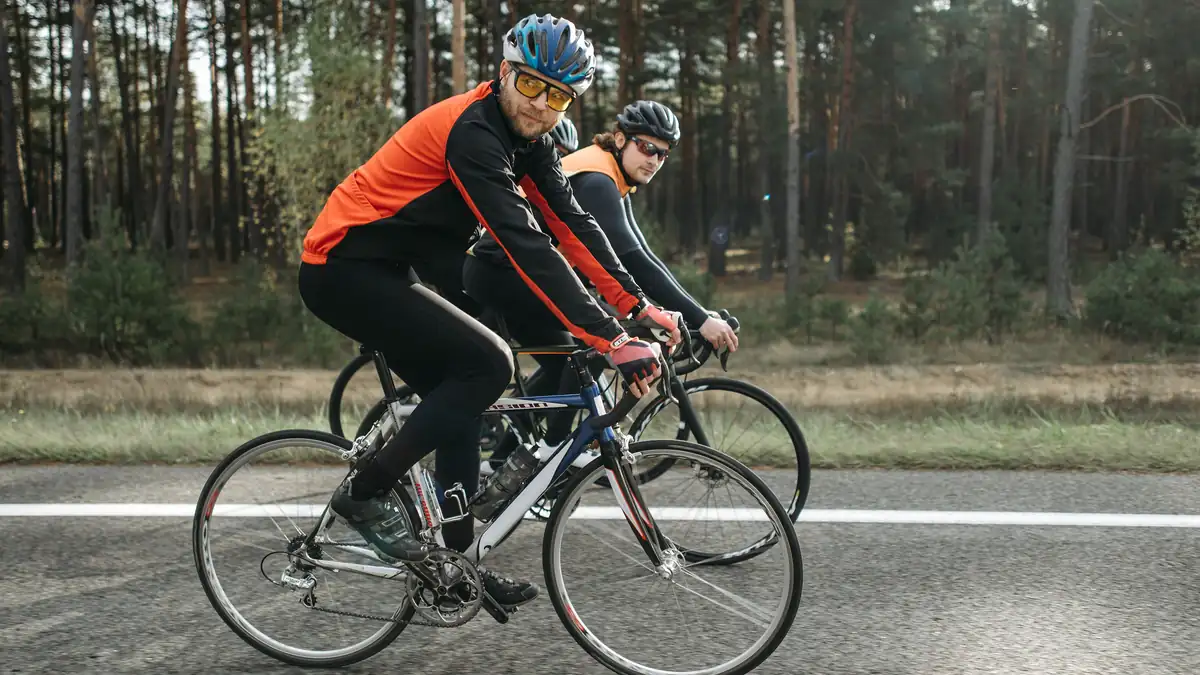
This is the biggest difference. A hybrid sits you upright, with flat handlebars, so you can see traffic, feel stable and step on and off easily — ideal in town. A road bike puts you lower over dropped handlebars, which is faster into a headwind and better for long distances, but takes some getting used to and is less relaxed in stop-start traffic.

Speed and effort
Road bikes are lighter, have skinnier, higher-pressure tyres and that aerodynamic position, so they are quicker for the same effort on smooth roads. Hybrids are a little heavier with wider tyres, so they are slightly slower but far more forgiving over potholes, kerbs and rough surfaces. For a short commute the speed difference matters less than you would think; for a long one it adds up.
Comfort and practicality
Hybrids win on everyday usefulness. Wider tyres soak up bumps, the upright position is easier on the back and neck, and most hybrids take mudguards, racks and panniers without fuss — so you can carry a bag or shopping and stay dry. Many road bikes, especially racier ones, have limited clearance and few mounting points, though “endurance” road bikes are more accommodating.
Where each one shines
- Choose a hybrid if you mostly commute or ride locally, value comfort and stability, want to carry things, and ride in normal clothes.
- Choose a road bike if you ride longer distances on tarmac, care about speed, enjoy the riding as exercise, and do not need to haul much.
- Consider gravel or an endurance road bike if you want road-bike speed with more comfort and the ability to handle rougher surfaces — a popular middle ground.
Whichever you pick, get the size right
A comfortable bike of either type beats a fast bike that does not fit. Before you buy, work out your frame size with our bike size guide and calculator, and if you are buying second-hand, run through our used bike checklist first. If you want an electric version of either, the e-bike buyer’s guide covers that.
Frequently asked questions
Is a hybrid or road bike better for commuting?
For most commutes a hybrid is better: the upright position, wider tyres and easy fitting of mudguards and racks suit town riding and carrying a bag. A road bike suits longer, faster commutes on good roads where speed matters more than practicality.
Are road bikes harder to ride?
Not harder, but different. The lower position over dropped bars takes some adjustment and feels less relaxed in heavy traffic, while rewarding you with more speed and comfort over long distances.
Can you put mudguards and a rack on a road bike?
Sometimes. Endurance and touring road bikes often have the clearance and mounting points; racier ones may not. Hybrids almost always do, which is part of why they are popular for commuting.
What about a gravel bike?
A gravel bike is a useful middle ground — road-bike handling with wider tyres and more comfort, able to handle rougher surfaces. It is worth a look if you cannot decide between the two.
In short
Match the bike to your riding: hybrid for comfortable, practical, everyday cycling; road bike for speed and distance on tarmac. Then nail the fit with our size guide before you buy.