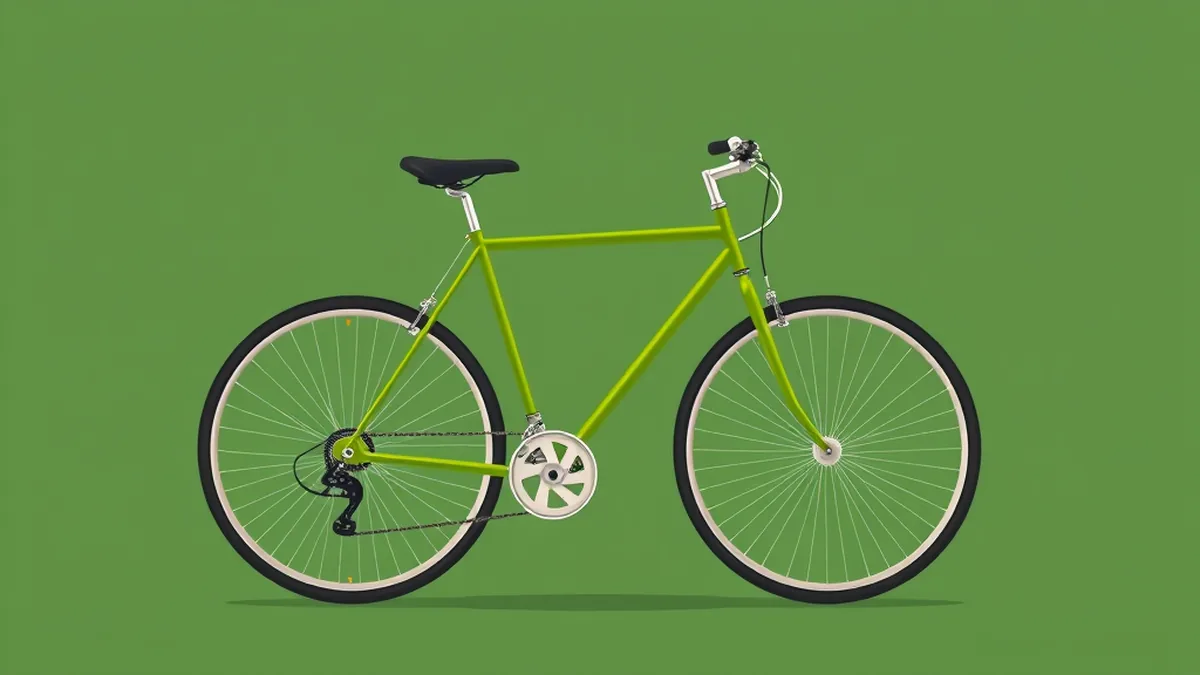
The right size bike disappears underneath you; the wrong one nags at your knees, wrists and lower back every ride. Frame size is the single thing most people get wrong when buying a bike, usually because they bought on price or colour and crossed their fingers. This guide shows you how sizing actually works, gives you a starting size from your height, and points out where the simple charts stop being reliable.
Start with the calculator, then read on for what the number really means.
Why frame size matters more than wheel size
When people say a bike is “the wrong size” they almost always mean the frame, not the wheels. The frame sets your reach to the handlebars and how high the saddle has to go. Too big and you stretch out, the bars feel far away and standing over the top tube is uncomfortable. Too small and you feel cramped, the saddle ends up jacked right up, and the handling goes twitchy. Either way you fidget, and a bike you fidget on is a bike you stop riding.
Wheel size (700c, 27.5″, 29″) matters for how a bike rolls and what tyres it takes, but it is chosen by the bike’s design, not by your leg length. Get the frame right first.
How bikes are measured
There is no single standard, which is why a “medium” from one brand can fit like a “large” from another:
- Road and gravel bikes are usually given in centimetres — 52 cm, 54 cm, 56 cm — referring roughly to the seat-tube length.
- Hybrid and city bikes are most often Small / Medium / Large, though some brands quote inches.
- Mountain bikes are typically S–XL, sometimes still in inches (15″, 17″, 19″).
Because the labels differ, treat the calculator’s result as a starting point and then check it against the specific bike’s own size chart before you buy.
Height-to-size: the quick guide
These bands are consistent with the charts mainstream UK retailers publish. They get most adults to the right size, but they are a guide, not a measurement.
Road / gravel (frame in cm): under 5′2″ (158 cm) → 47–50 cm; 5′2″–5′6″ → 50–53 cm; 5′6″–5′10″ → 53–56 cm; 5′10″–6′1″ → 56–58 cm; 6′1″–6′4″ → 58–61 cm; taller → 61 cm and up.
Hybrid / city: roughly Small to about 5′5″, Medium to about 5′9″, Large to about 6′1″, Extra large above that.
Mountain: similar bands to hybrid, sized S–XL.
The inside-leg method for road bikes
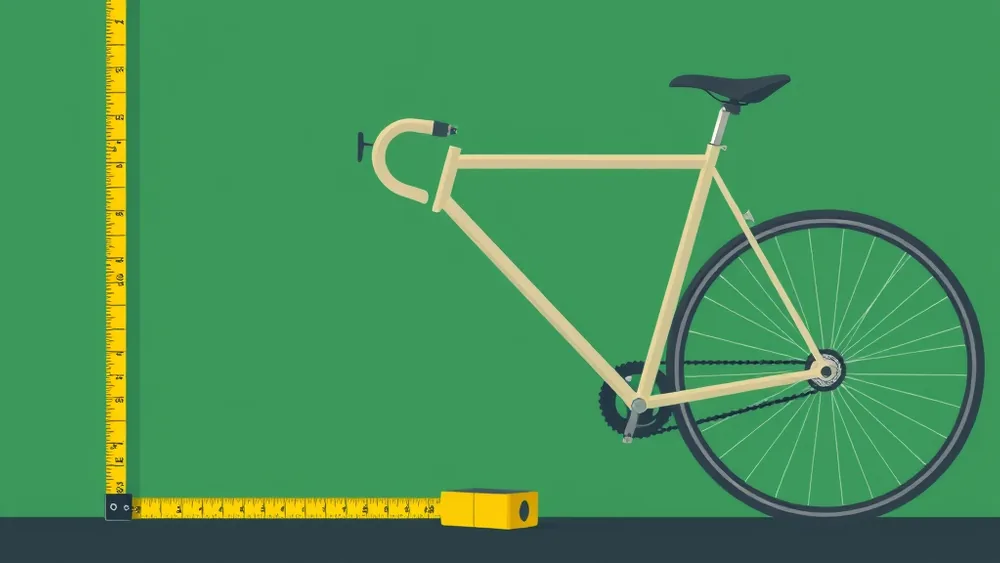
Height alone ignores that two people of the same height can have very different leg lengths. For road bikes, your inside leg gives a sharper answer. Measure from the floor to your crotch with bare feet, a book held firmly up between your legs as if it were the saddle. The calculator above will turn that into an approximate frame size if you enter it. It is still an approximation — geometry differs between an endurance bike and a racy one — but it beats guessing from height for drop-bar bikes.
Standover and the “between sizes” problem
Whatever the chart says, you want clearance. Stand flat-footed astride the bike: there should be at least a couple of centimetres between you and the top tube, more on a mountain bike where you sometimes have to bail off quickly. If the calculator puts you between two sizes — and plenty of people land right on a boundary — the tie-breakers are simple. Go smaller for nimble, sporty handling and if you have shorter arms; go larger for a roomier, more stretched-out position and if your reach is long. When you can, a test ride settles it in five minutes.
Common sizing mistakes
- Buying on the saddle height alone. You can raise a saddle on almost any bike; that does not make a small frame fit.
- Trusting one brand’s “medium” everywhere. Always read the actual chart for the bike in front of you.
- Sizing up “to grow into it”. That works for children, not adults — an oversized adult bike just rides badly.
- Ignoring the contact points. Stem length, saddle position and bar width fine-tune fit once the frame is right; they cannot rescue the wrong frame.
Frequently asked questions
Is bike frame size the same as wheel size?
No. Frame size is about how the bike fits your body; wheel size (such as 700c or 29″) is part of the bike’s design and is chosen by the manufacturer, not by your height.
What if I am between two sizes?
Pick the smaller frame for sharper, sportier handling, or the larger one for a more upright, roomy position. A short test ride is the most reliable way to decide.
Can I just raise the saddle to make a smaller bike fit?
Only up to a point. Raising the saddle adjusts leg extension, but it does not change the reach to the handlebars, so a frame that is too small will still feel cramped.
Does the calculator work for women’s and unisex bikes?
Yes. The height and inside-leg bands apply to any adult. Some brands offer women’s-specific geometry with different proportions, so check that bike’s own chart as well.
Once you know your size
Sizing is step one. If you are buying through your employer, our Cycle to Work scheme guide and calculator shows how much you can save, and if you are weighing up an electric bike, the e-bike buyer’s guide covers the law and what to look for.