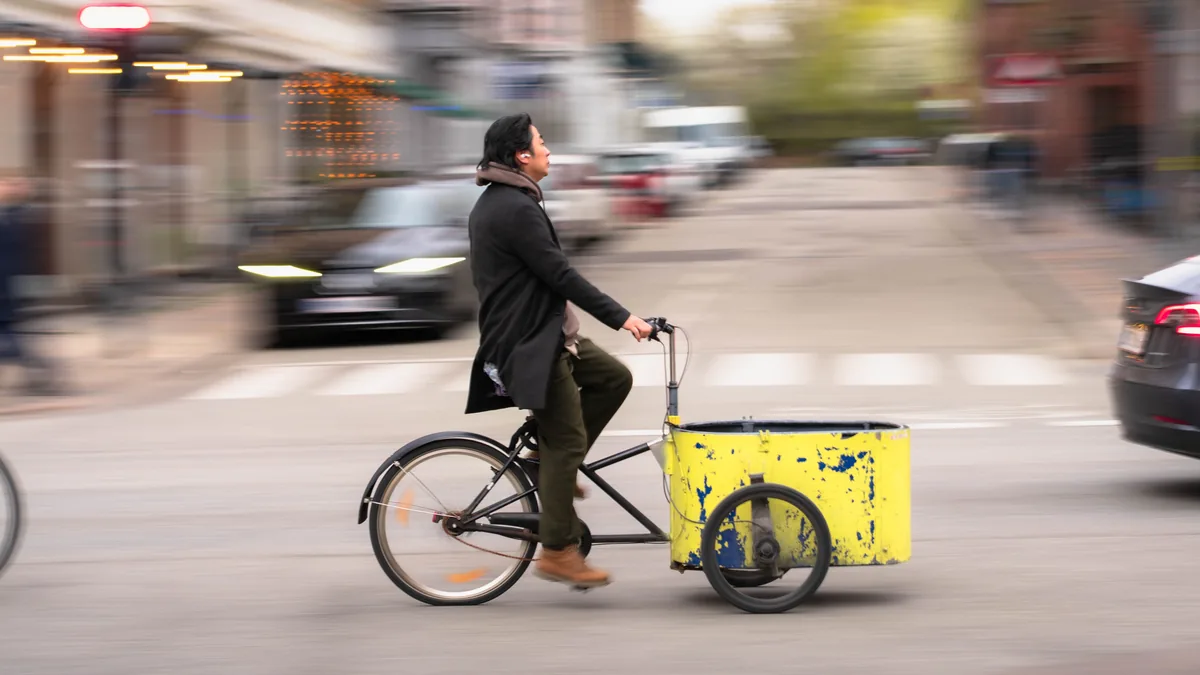
A cargo bike is a bicycle built to carry loads — children, shopping, tools, or anything else you’d otherwise put in a car boot. In the UK, they’re growing in popularity as a practical alternative to a second car for families and as a serious commuting option for anyone who needs to haul gear.
This guide covers what cargo bikes actually are, the three main types, what UK law says about electric versions, and whether you can get one through the Cycle to Work scheme.
The Three Main Types of Cargo Bike
The term “cargo bike” covers quite different designs. Knowing which type suits your situation is the most important decision you’ll make.
Longtail
A longtail looks like an ordinary bike with an extended rear section. The longer frame creates a substantial rear rack that can accommodate child seats, panniers, a cargo platform, or a combination of all three. The bike is only as wide as standard handlebars, so it fits through normal gaps in traffic and can often use a standard bike rack.
Longtails are the most versatile cargo bike for daily commuting. They ride much like a regular bike once you’re used to the added length, and electric versions make the extra weight largely invisible on the road.
Front-Loader (Bakfiets or Long John)
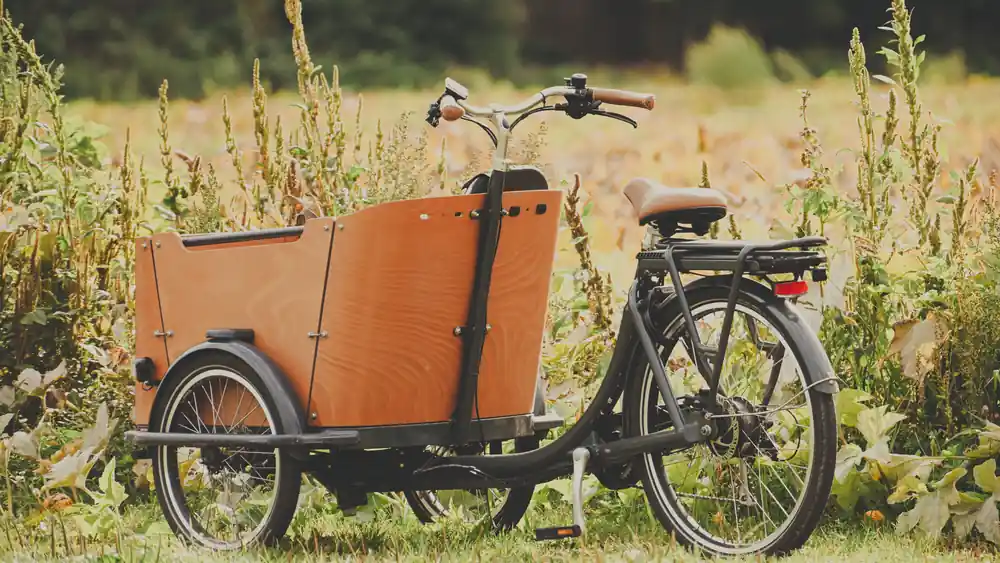
A front-loading cargo bike — sometimes called a bakfiets (Dutch for “box bike”) or Long John — places the cargo area between the handlebars and the front wheel. A large, low box sits at the front: deep enough for young children to sit in, wide enough for bulky shopping, stable enough to carry a substantial load without the bike feeling skittish.
The trade-off is size. Front-loaders are wide, long, and demand a bit of practice to steer confidently. They are not easily stashed in a narrow hallway or carried up a flight of stairs. If you have a garage, a dedicated bike store, or a ground-floor home, that concern largely disappears. In return, you get a genuinely car-replacing machine for the school run or weekly shop.
Midtail
A midtail sits between a standard bike and a longtail — shorter than a full longtail, with a rear rack rated for a useful load but not quite as cavernous. Midtails are easier to store and handle in tight urban spaces, and they are lighter than the larger cargo formats. If you need to carry one or two bags of shopping reliably but do not need to take two children and a dog, a midtail (often an electric one) may be the right balance.
Electric Cargo Bikes: What UK Law Says
Most cargo bikes sold in the UK today are electric, because the added motor makes the extra weight of the bike and its load manageable on anything other than perfectly flat terrain.
Under UK law, an electric bike qualifies as an electrically assisted pedal cycle (EAPC) if it meets two conditions: the motor’s continuous rated power output must be no more than 250W, and electrical assistance must cut off once the bike reaches 15.5mph (25km/h). The bike must also have pedals capable of propelling it (GOV.UK EAPC guidance).
A cargo bike that meets those rules needs no licence, no vehicle tax, and no motor vehicle insurance. The rider must be at least 14. These rules apply regardless of how large or heavy the bike is — the EAPC framework does not treat cargo bikes differently from any other pedal cycle.
An e-cargo bike with a more powerful motor, or one that provides assistance above 15.5mph, would be classified as a motorcycle or moped, requiring registration, a licence, insurance, and a helmet. Check any e-cargo bike’s specification sheet before buying. If the motor is rated above 250W continuous, or if the bike has a throttle that operates without pedalling, it is not road-legal in the UK without proper registration.
For a broader look at how UK e-bike rules work in practice, our guide to e-bikes for UK commuters covers the practicalities.
Can You Get a Cargo Bike Through the Cycle to Work Scheme?
Yes — cargo bikes are eligible under the Cycle to Work scheme, including electric cargo bikes that meet the EAPC criteria above.
Cyclescheme explicitly lists cargo bikes as eligible purchases and, since removing the £1,000 ceiling for FCA-authorised providers, can cover bikes at any price point (Cyclescheme).
Green Commute Initiative (GCI) also accepts cargo bikes — including specialist cycles and e-cargo — as part of its scheme, which similarly has no upper limit on bike value (GCI).
The standard eligibility rules apply: your employer needs to be enrolled with a provider, and the bike must be used for qualifying journeys (commuting or travel between workplaces) for at least 50% of its use. Safety accessories such as helmets and lights can be included alongside the bike.
Given that cargo bikes — especially e-cargo — sit at a higher price point than most commuter bikes, the tax savings through salary sacrifice are proportionally larger. Our guide to whether the Cycle to Work scheme is worth it explains how the savings work in practice.
Who Actually Benefits from a Cargo Bike?
Cargo bikes are not for everyone, and that is fine. They make most sense if one or more of these applies to you:
- You do the school run by car. A front-loader or longtail with child seats can replace this journey for families with young children. This is probably the single most compelling use case in the UK.
- You carry heavy or bulky loads regularly. Tradespeople, market traders, and anyone who shops for a household without a car will find cargo bikes genuinely useful.
- You commute on mostly flat terrain. Even with an electric motor, cargo bikes demand more effort on long climbs than a lighter bike. Flat urban routes are where they shine.
- You have somewhere to store a large, heavy bike. A cargo bike in a narrow hallway or up three flights of stairs is a daily inconvenience that erodes the benefits quickly.
If you are primarily looking for a bike to get to work without carrying much beyond a bag and a laptop, a standard commuter hybrid or a purpose-built commuter bike will serve you better and cost considerably less. Our UK e-bike buyer’s guide covers lighter electric options.
What to Consider Before Buying
Weight and Storage
E-cargo bikes are considerably heavier than standard bikes — well above what most people can comfortably lift — so flat storage at home or a secure bike shed is near-essential. Check that any route between your front door and the road is navigable without lifting.
Cost
Cargo bikes occupy a wide price range. Manual longtails start well below electric versions, but most people buying a cargo bike for serious commuting choose electric. Check current prices with retailers; figures change frequently. If your employer is on the Cycle to Work scheme, factor in the salary sacrifice saving before comparing cash prices.
Electric vs Manual
A manual cargo bike is lighter and cheaper, but carrying two children and a week’s shopping up even a gentle slope will wear you down quickly. For most UK commuters — where terrain is rarely fully flat and cargo is genuinely heavy — the electric motor is the difference between using the bike every day and leaving it at home when it rains or you are tired.
Test Before You Buy
Front-loaders in particular handle very differently from a standard bike. Most cargo-specialist shops will let you test ride before committing. A bike that feels unstable on the first go often clicks within a few minutes of practice, but it is worth finding out before purchase rather than after.
Frequently Asked Questions
Are cargo bikes legal in the UK?
Manual cargo bikes are legal with no restrictions. Electric cargo bikes are legal if they meet EAPC rules: motor rated at no more than 250W, assistance cutting out at 15.5mph (25km/h). Compliant e-cargo bikes need no licence, vehicle tax, or motor vehicle insurance. Riders must be at least 14 (GOV.UK).
Can I get a cargo bike through the Cycle to Work scheme?
Yes. Both Cyclescheme and GCI accept cargo bikes, including e-cargo, as eligible purchases. Your employer must be enrolled with a provider, and the bike must be used for qualifying commuting journeys at least 50% of the time. There is no upper price cap with FCA-authorised providers such as Cyclescheme and GCI.
How heavy are cargo bikes?
Considerably heavier than standard commuter bikes. Electric longtails and front-loaders can weigh well above 25kg, with front-loaders often heavier still. This is the practical constraint that most buyers underestimate. If storage means carrying the bike up stairs, factor that into your decision before buying.