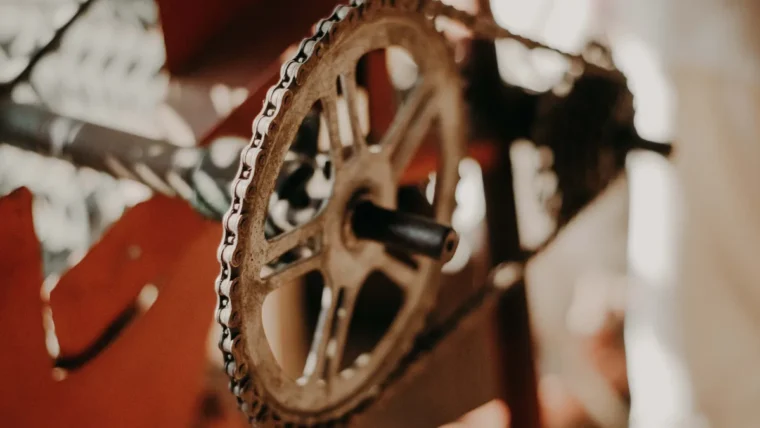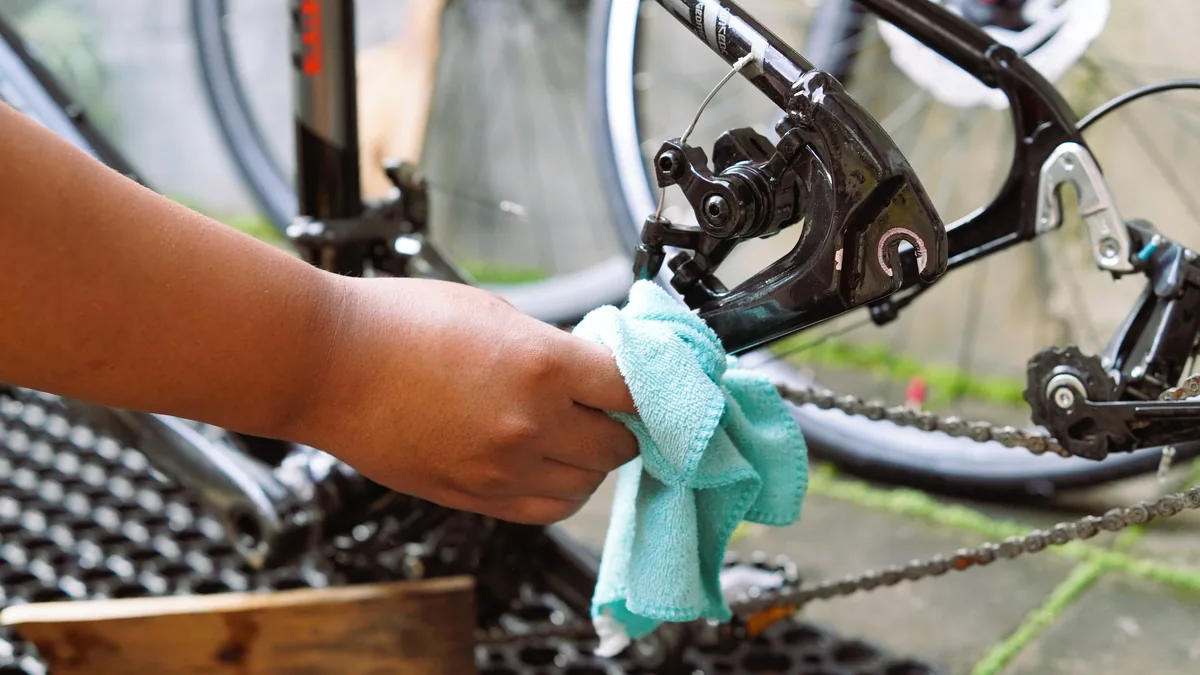
A dirty chain is the most common cause of premature drivetrain wear on a commuter bike. Cleaning and lubricating it properly takes about 20 minutes and extends the life of your chain, cassette, and chainrings considerably. Here’s exactly how to do it.
What you’ll need
- Bicycle-specific degreaser
- A stiff-bristled brush or chain scrubber tool
- Warm soapy water and a bucket or sponge
- Clean rags or old cloths
- Bike chain lubricant — dry lube or wet lube (see below)
You don’t need a workstand, though it helps. Leaning the bike against a wall and turning the cranks by hand works fine for most of this.
Step 1: Check the chain before you start
If your chain is stretched beyond its wear limit, cleaning won’t rescue it — it needs replacing. A chain wear indicator tool (often called a chain checker) measures this in a few seconds. You can also ask a local bike shop to check during a service. If the chain is still within tolerance, carry on.
Step 2: Apply degreaser
Back-pedal slowly and apply a bicycle-specific degreaser along the chain. Avoid WD-40 or generic lubricants here — WD-40 is a water displacer, not a lubricant, and will leave the chain dry once it evaporates. According to Park Tool’s chain cleaning guide, a bike-specific degreaser is formulated to cut through the thick combination of old lube and grime that builds up in chain links. Leave it to dwell for a minute or two.
Step 3: Scrub the chain
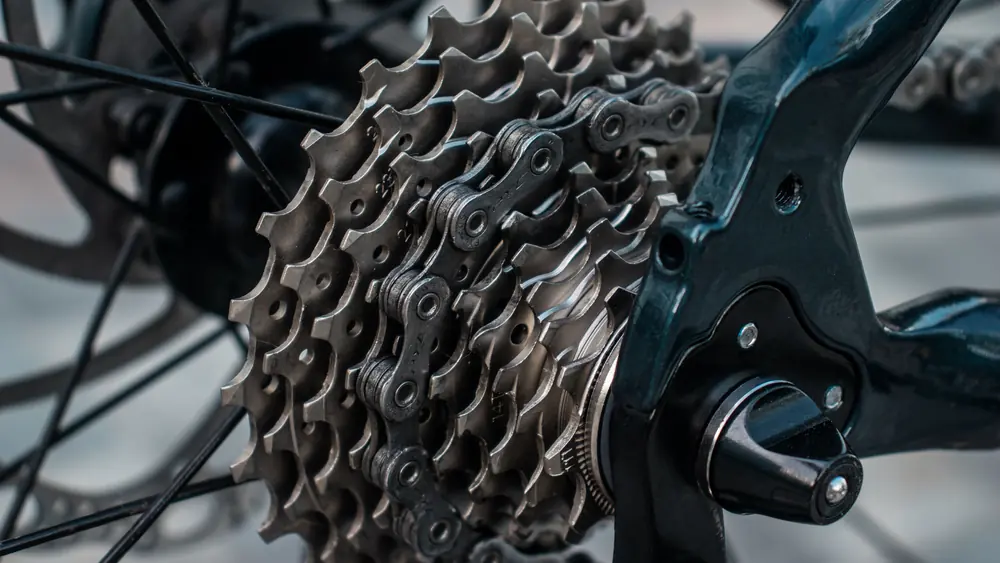
Hold a stiff brush against the chain and back-pedal for several revolutions, working the degreaser into the links. A chain scrubber tool — a small cage that clips around the chain and holds degreaser — makes this quicker and keeps your hands cleaner, but a brush works just as well. Scrub the cassette sprockets and chainrings at the same time using a small brush or old toothbrush.
Step 4: Rinse and dry thoroughly
Rinse the chain with clean water to remove the degreaser. Don’t use a pressure washer — it forces water into the sealed bearings in your wheels and bottom bracket. A gentle pour or a damp cloth is enough. Then dry the chain with a clean rag. Lubricating a wet chain traps moisture inside the links, which leads to rust and accelerated wear, so make sure it’s properly dry first. A few minutes in the sun, or running the chain through a dry rag several times, does the job.
Step 5: Choose the right lubricant
For UK commuters, getting this right matters more than most guides acknowledge. There are two main types:
- Dry lube — applied wet, it dries to a wax-like finish. It picks up less grime on dry days and keeps the chain cleaner for longer. The trade-off, as Tru-Tension (a UK lubricant manufacturer) explains, is that dry lube washes off quickly in rain. If you’re commuting through a dry spell, dry lube is the cleaner option.
- Wet lube — heavier and oil-based, it stays on the chain in wet and muddy conditions. For commuters riding through autumn and winter in Britain, wet lube is the practical choice. It attracts more grime than dry lube, so the chain will need cleaning more frequently — but it won’t leave you grinding through a rust-prone, underlubricated chain after a wet Tuesday morning.
The straightforward rule: use dry lube in summer, switch to wet lube before autumn. If you’re only buying one lube and you’re unsure, wet lube is the more forgiving default for British conditions.
Step 6: Apply lube and wipe off the excess
Back-pedal slowly and apply a single drop of lube to each link rivet — the small metal pins you can see along the chain. Work your way around the full chain. This sounds more time-consuming than it is; once you’re used to it, it takes about 90 seconds. BikeRadar recommends targeting the lower section of the chain where it exits the rear derailleur, which reduces the risk of flicking lube onto your disc brake rotor.
Once applied, wipe the outside of the chain firmly with a clean rag. This removes excess lube from the outer chain plates, where it does no useful work and only attracts road grime. The lubrication that actually matters is inside the links, between the pins and rollers — not on the surface you can see.
How often should a commuter clean their chain?
Clean and re-lube every 100–200 miles in dry conditions, or after every wet ride, according to BikeRadar. For most commuters cycling 5–10 miles each way, that’s roughly every two to four weeks in summer and weekly in wet winter conditions.
A quick test: run your thumb and forefinger along the chain. If it leaves a thick black smear, it needs cleaning. If it’s lightly grey or almost clean, a top-up lube (without a full clean) may be enough for now.
Common mistakes to avoid
- Using WD-40 as a lubricant. WD-40 is a water displacer and degreaser — useful for freeing a seized bolt, not for a chain. It evaporates fast and leaves the chain dry.
- Skipping the rinse after degreasing. Degreaser residue left on the chain attacks the fresh lube you apply next.
- Over-lubing. Excess lube on the outer chain plates acts as a magnet for road grime, turning your chain black faster and wearing out your cassette sooner. Wipe off the excess every time.
- Lubing a wet chain. Water trapped inside the links corrodes them from the inside. Always dry the chain before lubricating.
Keeping your chain clean is one task in a wider 20-minute weekly routine. Our guide to basic bike maintenance covers the other quick checks — tyres, brakes, bolts — that keep a commuter bike reliable. And if you get a flat on the way in, our step-by-step puncture repair guide walks you through fixing it roadside.
Frequently asked questions
Can I clean my bike chain without removing it?
Yes — for most commuters, that’s the easiest approach. A chain scrubber tool or a brush with degreaser cleans the chain in place while the bike stands still. You only need to remove the chain if it requires replacing, or for a very deep clean of the cassette.
How do I know if my chain needs lubing or replacing?
If the chain squeaks when you pedal, it needs lube. If it slips under load or skips across gears, it may be worn and need replacing. A chain wear gauge (check current price at your local bike shop or online) gives a definitive answer in seconds.
Should I use dry or wet lube on my UK commuter bike?
Wet lube for autumn, winter, and any time rain is likely. Dry lube works better during summer dry spells. When in doubt, wet lube is more forgiving for British conditions — it won’t wash off mid-commute.
How often should a commuter clean their bike chain?
Every 100–200 miles in dry conditions, or after every wet ride. For a typical commuter, that’s roughly every two to four weeks in summer and weekly during wet autumn and winter months.