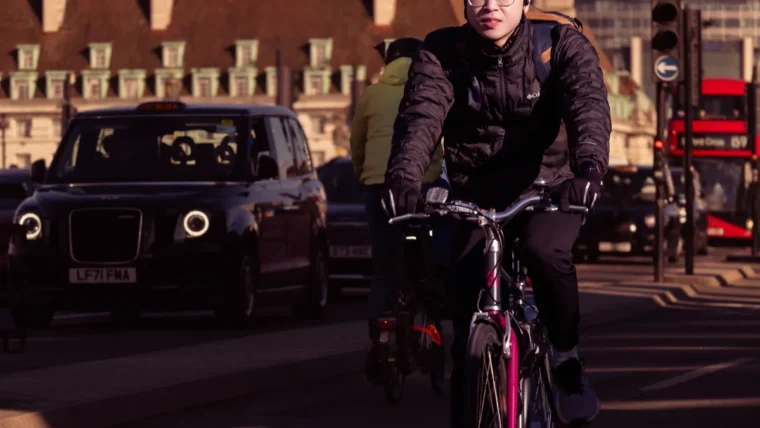
Cycling is one of the easiest ways to fold real exercise into an ordinary day — the ride to work, the school run, a loop round the park. But how much are you actually burning? This calculator gives you a sensible estimate from three things: your weight, how hard you ride, and either how long or how far you went.
It is a guide rather than a lab measurement. Enter your details, then read on for how the maths works and what nudges the number up or down.
How the calculator works
Behind the button sits the standard equation exercise scientists use, often called the ACSM formula:
calories = MET × 3.5 × your weight in kilograms ÷ 200 × minutes
A MET, or metabolic equivalent, is simply a way of saying how hard an activity is compared with sitting still. Sitting quietly is 1 MET. A steady cycle at 12–14 mph is about 8 METs, so it uses roughly eight times the energy of resting on the sofa. Multiply that by your body weight and the time you spent riding and you have a calorie estimate.
If you enter a distance instead of a time, the tool first works out roughly how long that ride took at a typical speed for the effort you chose, then runs the same sum. That is why it shows you the assumed speed alongside the result — so you can see the working.
MET values for cycling
The effort levels in the calculator come from the Compendium of Physical Activities, the reference researchers use for this kind of estimate. These are the cycling figures it draws on:
| How you ride | Speed | METs |
|---|---|---|
| Leisurely | under 10 mph | 4.0 |
| Steady, light effort | 10–12 mph | 6.8 |
| Moderate effort | 12–14 mph | 8.0 |
| Fast, vigorous | 14–16 mph | 10.0 |
| Racing pace | 16–19 mph | 12.0 |
| Mountain biking | off-road | 8.5 |
To put that in everyday terms: a 70 kg rider burns around 290 calories an hour pottering along, about 590 at a moderate 12–14 mph, and roughly 880 at a hard racing pace. Heavier riders burn more for the same effort and lighter riders less, which is exactly why the calculator asks for your weight rather than handing everyone the same figure.

What changes the number
A calorie figure from any calculator, ours included, is an estimate built on averages. Several things move your real burn up or down:
- Terrain. Hills cost far more than the flat, and a headwind does much the same job as a gentle climb. An exposed ride along the coast can be hard work even on the level.
- Your fitness. A trained rider is more efficient and may even burn slightly less for the same speed — though they can also hold a harder pace for longer, which more than makes up for it.
- The bike and the load. A heavy hybrid with panniers, a child seat or a week’s shopping takes more effort to shift than a stripped-back road bike.
- How you sit. Tucked low against the wind you slip through the air more easily; sitting bolt upright, you push more of it aside.
- Stops and starts. Town riding with traffic lights every hundred yards is more stop-go than the steady cruise the averages assume.
None of this makes the estimate useless. It just means you should treat the result as a good ballpark, not a precise count, and watch the trend over a week rather than a single ride.
Frequently asked questions
How many calories does cycling burn per hour?
It depends on your weight and how hard you ride. For a 70 kg rider, a gentle pootle burns roughly 290 calories an hour, a moderate 12–14 mph ride about 590, and a fast 16–19 mph effort around 880. Enter your own weight in the calculator above for a figure that fits you rather than an average.
Do you burn fewer calories on an electric bike?
Usually, yes. The motor takes on some of the work, especially on hills and pulling away from a stop, so your body does less. You still pedal and still burn calories, just fewer than on an unassisted bike over the same route. If you are weighing one up, our electric bikes buyer’s guide explains how the assistance actually works.
Is cycling good for losing weight?
It can help. Weight change comes down to the balance between the energy you take in and the energy you use, and regular riding adds to the “used” side while being kind on the knees. It works best alongside what you eat rather than as a substitute for paying attention to it. The calculator is handy for seeing what a typical week of riding adds up to.
How accurate is this estimate?
It is a reasonable ballpark, not a precise count. The formula uses population-average effort levels and your body weight, so it cannot know your exact fitness, the hills on your route or the wind on the day. Take it as a sensible guide and look at the pattern over time rather than fixating on one ride.
The bottom line
Cycling turns dead time — the commute, the errands, the school run — into genuine exercise, and this calculator gives you a fair sense of what that is worth in calories. Plug in your weight, pick the effort that matches your usual ride and see the number for yourself. If you are curious what those same journeys would cost in fuel and carbon when you would otherwise drive, our commute cost and CO2 calculator does that sum, and the cycle to work scheme guide covers how to get a bike for less.